Imagine the radiance of fire melting on your face as you spend time with your family and friends talking on a fine crisp evening. Or enjoying roasted food as you chat about old times around the flames? There are plenty of ways to enjoy your backyard fire pit, but only if built right.
We are here to help you choose the right location, design, size, and how to construct from scratch. So, to bring your imagination into reality, let us look at the important things to know before building a fire pit in your backyard.
History Of Fire Pit
The fire pit has been built and used by man from many moons ago. Initially, fire pits were made by digging holes in the ground. The main idea was to reduce the flame visibility from rival tribes and predators in the nearby area. Another reason was to contain the fire in a place and avoid it from spreading.
Prehistoric fire pits were built by our ancestors for several benefits. Still, it has also benefited scientists in the modern era to estimate the period of bones and seeds through carbon dating. In today’s day and age, fire pits range from holes in the ground to classy, well-structured, and decorative fire pits.
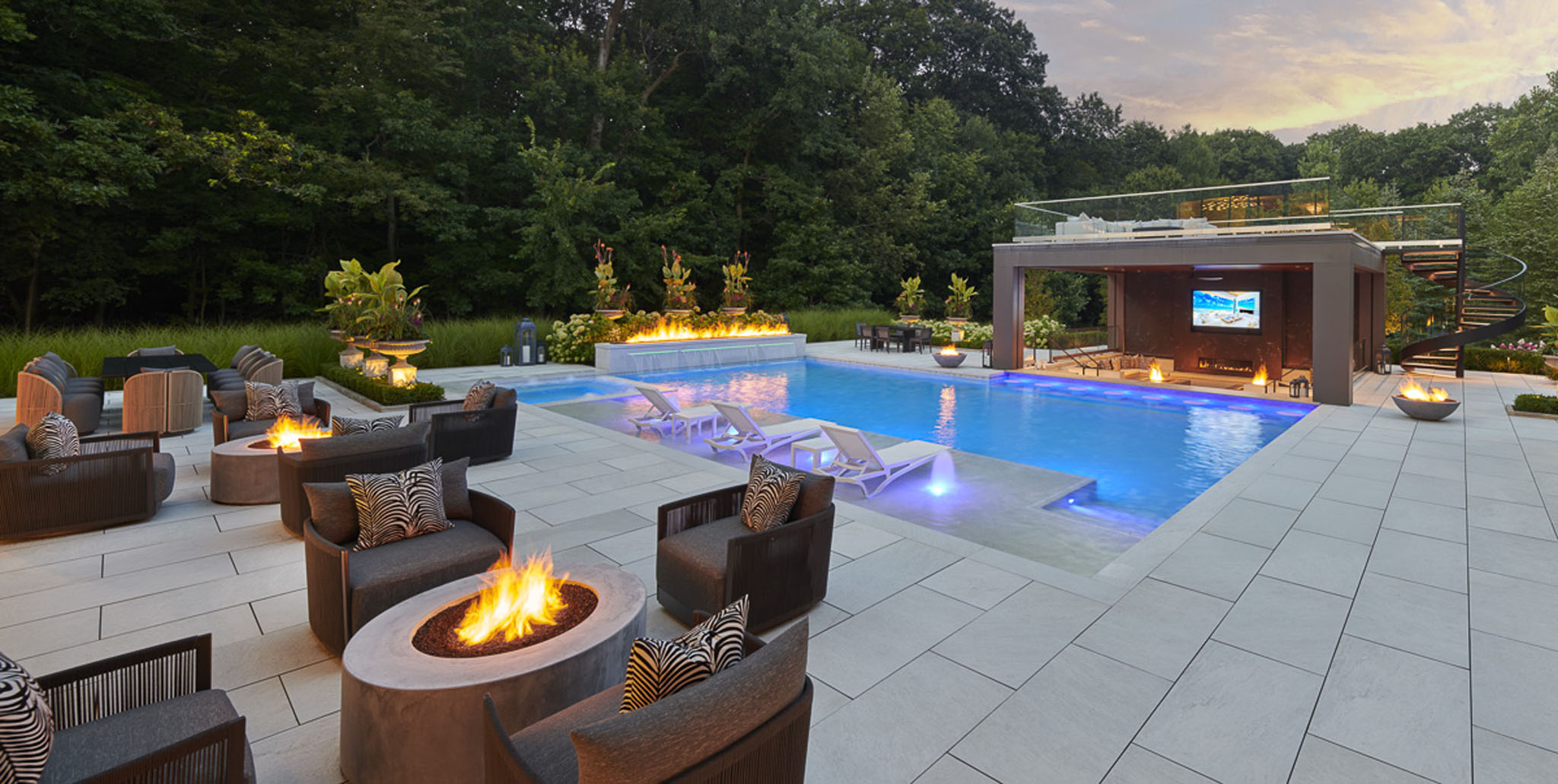
The modern fire pits symbolize luxury built using stone, brick, glass, metal, and other materials. Also, the variety of fuel varies from natural gas, natural wood, and other sources designed to have a controlled fire with boundaries. Nowadays, you can even buy a premade fire pits. Many suppliers also make custom-made fire pits that are personalized as per customers’ specifications.
What Are Things To Consider Before Installing A Fire Pit?
Simply, a fire pit is more of a container in which you can make an outdoor fire. There are different types of fire pits like portable fire pits, in-ground and permanent above-ground pits. You can choose any one of them as per your preference.
The fire pit is a good alternative to the fireplace as it is less expensive. A fire pit costs you from a few hundred to a thousand dollars, whereas a fireplace can cost $5500 to $10,000. Fire pits also offer you a 360-degree view and act as a centerpiece for all your gatherings. However, before installing a fire pit, you must consider few important things to optimize features and security. Here we go!
Location Of Your Fire Pit
Determining a perfect place for your fire pit is crucial to ensure safety and avoid accidents. You cannot control the fire, but you can control its location and minimize the risk of property damage, injuries, and fines. Start by checking your local laws regarding the legitimacy of fire pits in your area. Also, consult your homeowner’s association regarding the use of a fire pit in your surroundings.
Fire pits must be installed on a leveled surface not more than 10 feet away from any structure. 20-25 feet is ideal as this wide-open space is away from woodpiles, trees with hanging limbs, bushes, and other materials that have the potential to catch fire.
Paved surfaces are perfect for fire pits. However, if you want placement on wood or grass, use fireproof barriers and precautions to avoid damage. Let us look at the different locations that you can utilize to place your fire pits while ensuring safety.
1 - Firepits At A Distance
Install your fire pit 25 feet away from your home if you have enough space around it. Using a number greater than 10 feet is recommended to avoid inherited dangers like dry leaves, wind, fuel availability, and other factors that can cause damage. The idea is to keep enough distance between the fire pit and other material which can catch fire.
2 - Firepits Away From Trees
Keep your fire pit away from everything you don’t want to burn, especially your plants and trees. Maintain a distance of 10-15 feet between the branches of trees and the fire pit to reduce the chances of ignition. Do not keep a fire pit under a tree or low-hanging branches as the chances of fire spreading increase.
3 - Firepit Under A Covered Patio
If you consider placing a fire pit under a patio, gazebo, or any other structure, use propane gas to fuel the fire. Some wood-fueled fire pits produce a high amount of sparks, smoke, and heat which can damage or discolor the patio or overhead cover. Under a patio, the fire smoke will have less space to move, so if you don’t want to have a chimney, go for propane fire pits.
4 - Firepits On Grass Or Wood
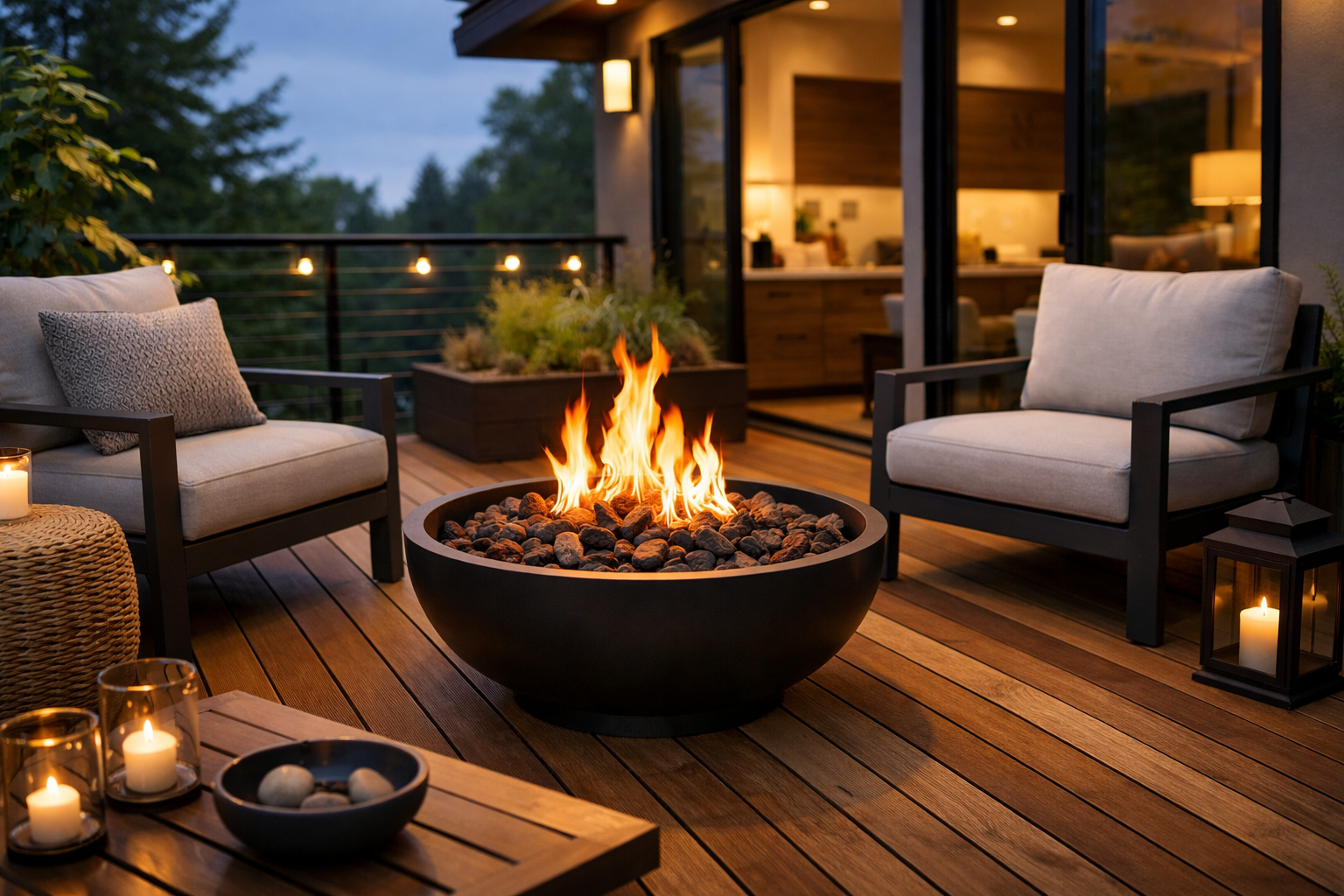
If you have an outer floor made up of wood, composite deck, or covered in grass, you must pay attention to the safety features before installing a fire pit. When installing a fire pit on a deck like wood, composite, or grass, keep the fire pit at a distance of 20-25 feet away from your home.
Ensure that the surrounding area is clear of dry leaves and other debris. Do not put a fire pit directly on top of the deck; keep an extra concrete paver between pi and deck to avoid damage.
Size Of Your Fire Pit
The size of fire pits varies from large in-built structures to small portable styles. Pick a size that is within your budget and also fits well. Premade Fire pits usually have a diameter of 24 to 30 inches. Inbuilt fire pits require a bigger area and have a diameter of 36 to 58 inches.
Make sure you have enough area for movement near a fire pit. Choose 5 to 7 feet around the lips of the fire pit to move the chair and seating as per your needs. If you want an in-built fire pit, make a distance of 40 to 48 inches between the wall of seating place and fire pit.
Height Of Fire Pit
The height of the fit pit ranges from in-ground, low to the ground, and tall above the ground. The typical height is 18 inches. However, you can choose it as per your preference and needs.
If you wish to rest your feet near the edges of a fire pit, consider a height that is 18 inches or less. The height of the fire pit and seating also affect the warmth you get. A lower fit pit provides more warmth to the body.
Fuel Sources For Your Fire Pit
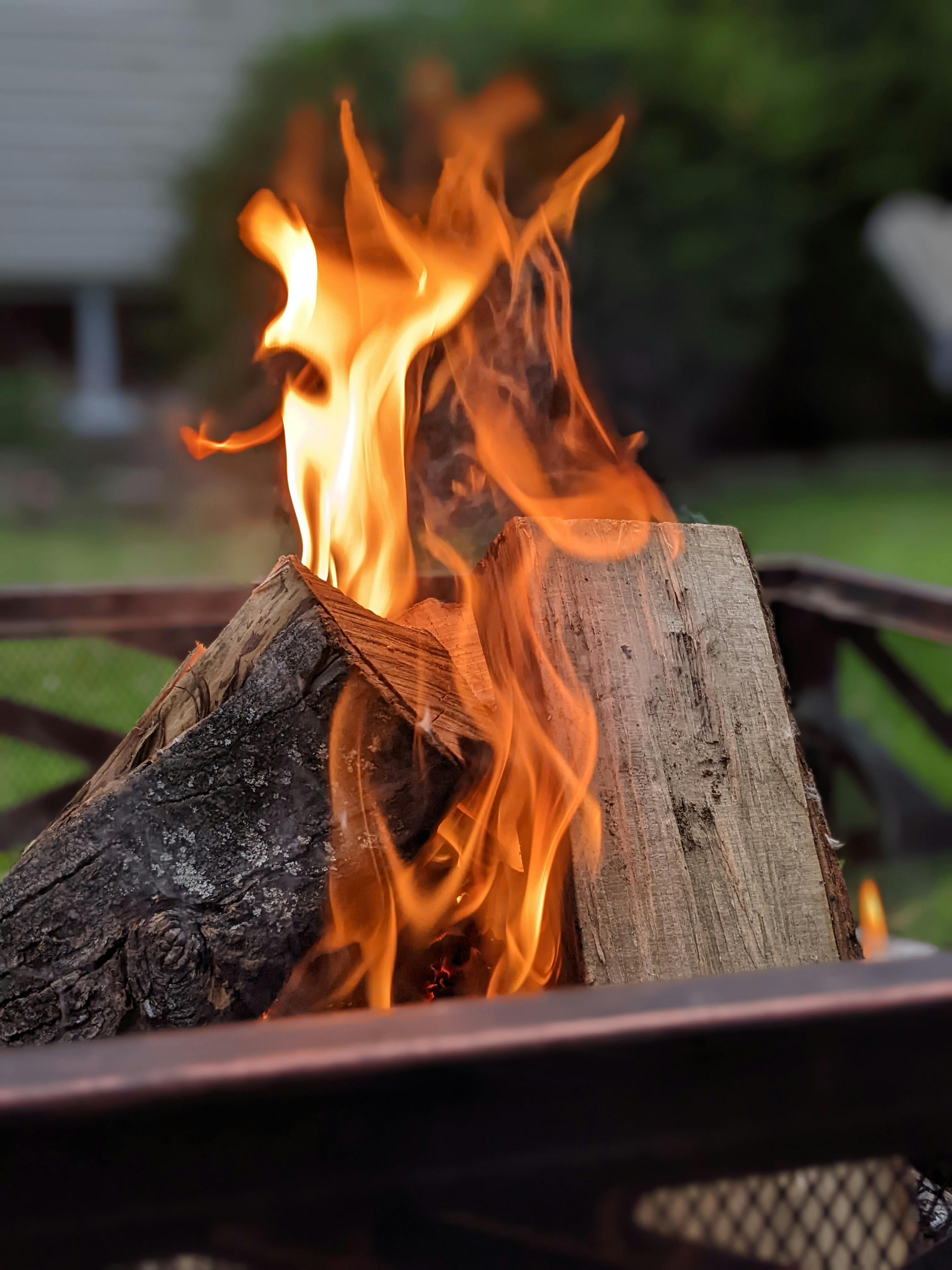
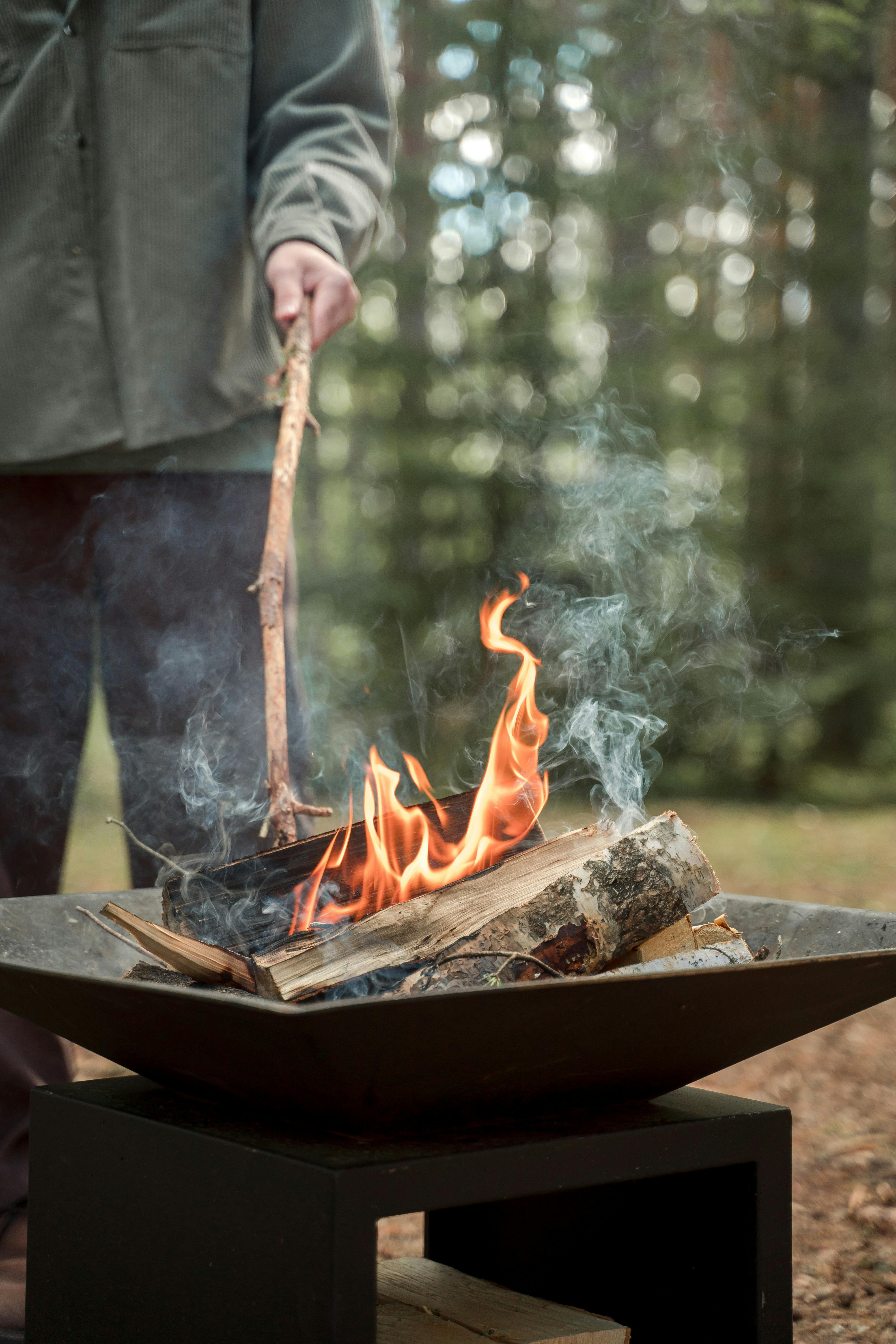
Choosing a good fuel is vital to reduce the risk of damage and injuries. There are different options of fuels from which you can choose the best suited for your fire pit. People go for wood-burning fire pits to enjoy the crackling sound as they sip on their favorite coffee.
However, wood can be an unsafe choice as it can be re-sparked by the wind when the ashes are warm. So, you need a safer and smoke-free alternative that gives you a clean flame and is easy to handle. Let us learn more about the fuels used in fire pits.
1 - Firewood
It gives you a pleasant effect with a crackling sound and sweet smell. But let us look at other advantages and cons of using firewood.
Pros Of Firewood
• Wood is easily accessible and cheap.
• This fuel is sustainable and eco-friendly.
• Firewood gives you a steady flame.
Cons Of Firewood
• You will have to stack and store firewood which is messy and time-consuming.
• Firewood is unsafe if left unattended as the ashes stay warm for longer and can be re-sparked.
2 - Natural Gas
Natural gas is handy, and fire can be started easily, unlike wood, where you have to cut, stack, store, and gather wood whenever needed. Let us look at the pros and cons of natural gas.
Pros Of Natural Gas
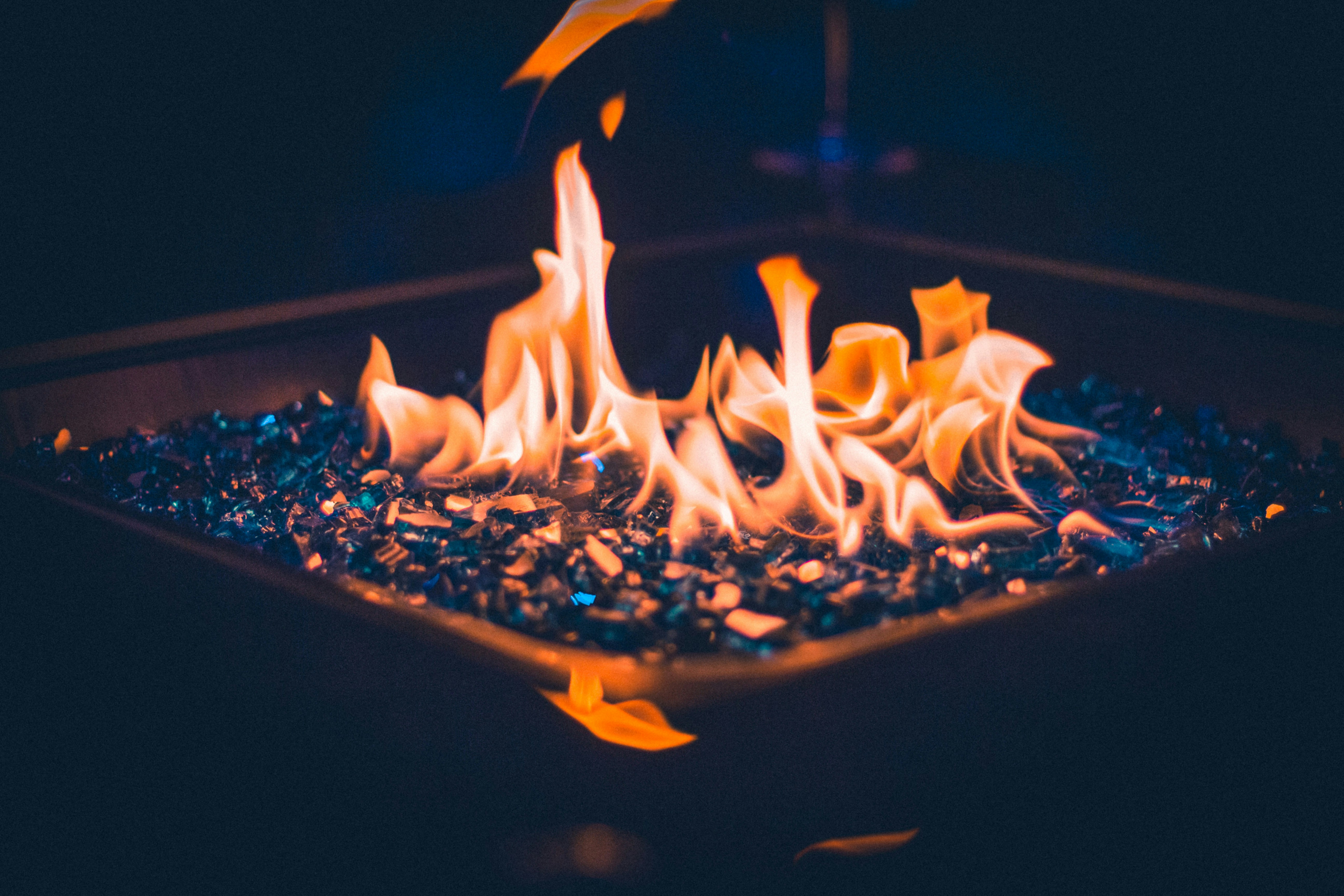
• Natural gas produces a clean flame with no smoke, ashes, or ember.
• It helps you in lighting fire quickly via a key, button, or switch.
• Fire made by natural gas leaves no ashes, so your pit gets easier to clean.
• This is the safest fuel for your fire pit.
Cons Of Natural Gas
• You cannot use natural gas for cooking as it doesn’t provide the same heat and flames as wood.
• Installing a gas line for a fire pit is costly.
3 - Propane
Several people opt for propane fire pits for smoke-free and clean flames. Also, propane doesn’t need a gas pipeline to function. Why not learn more about this fruitful alternative? Following are the pros and cons of propane.
Pros Of Propane
• Propane fire pits are easy to use; you simply have to connect a propane tank and control the amount of it with a valve.
• Propane is cheaper than natural gas and requires no gas line installation.
• It is more efficient than natural gas and burns at 2500 BTUs.
• Most propane fire pits are portable.
Cons Of Propane
• You will have to refill your propane tank from time to time.
• Propane fire pits are high-maintenance.
Material To Use For Fire Pits
Fire pits make the brilliant centerpiece at all times. So, make sure that the focal point of your outdoor area looks elegant and is durable. Fire pits can be constructed from a wide variety of materials. From steel to ceramics, let us learn more about fire pit materials and how these elements can add a fantastic flair to your outdoor living space.
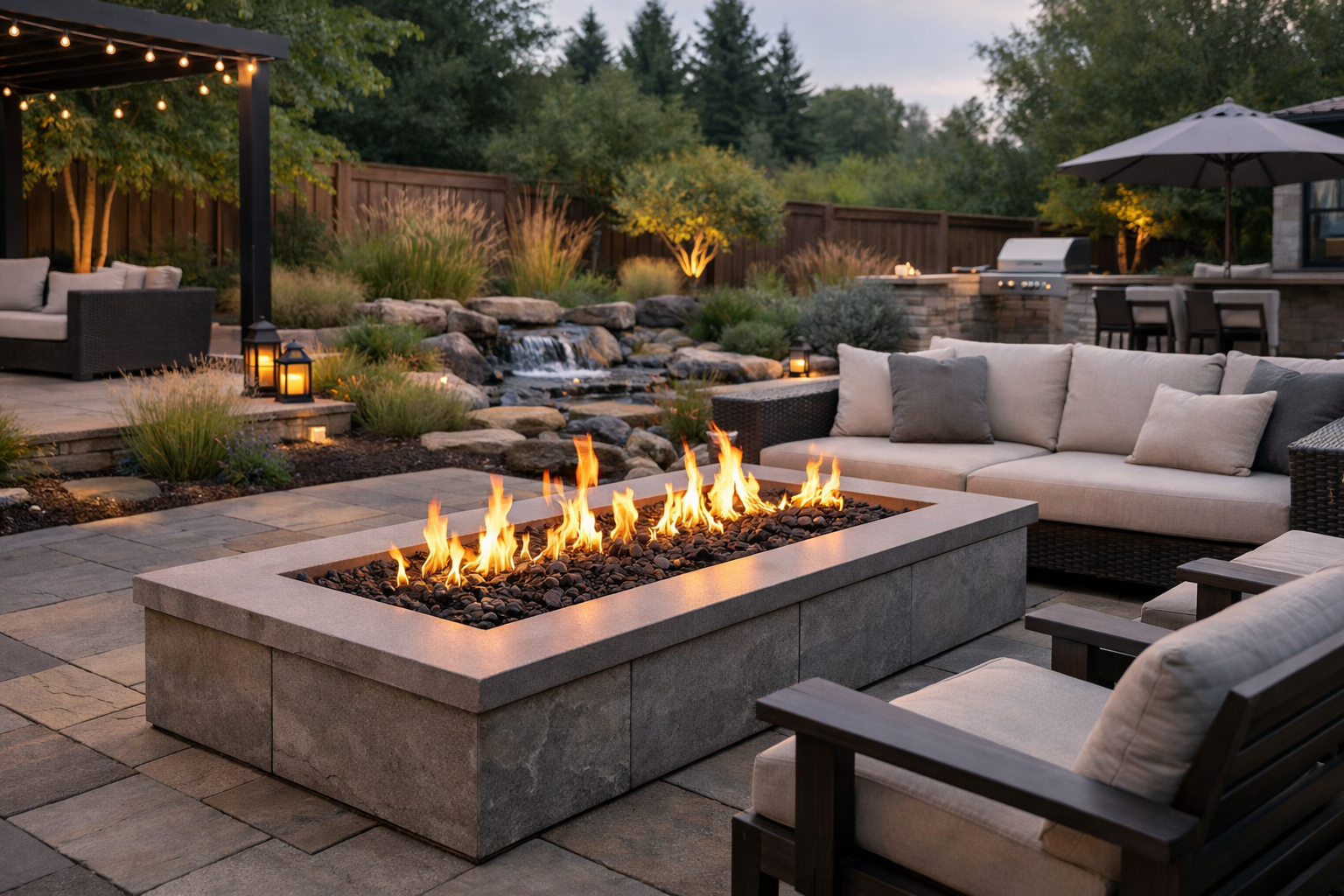
1 - Concrete Fire Pits
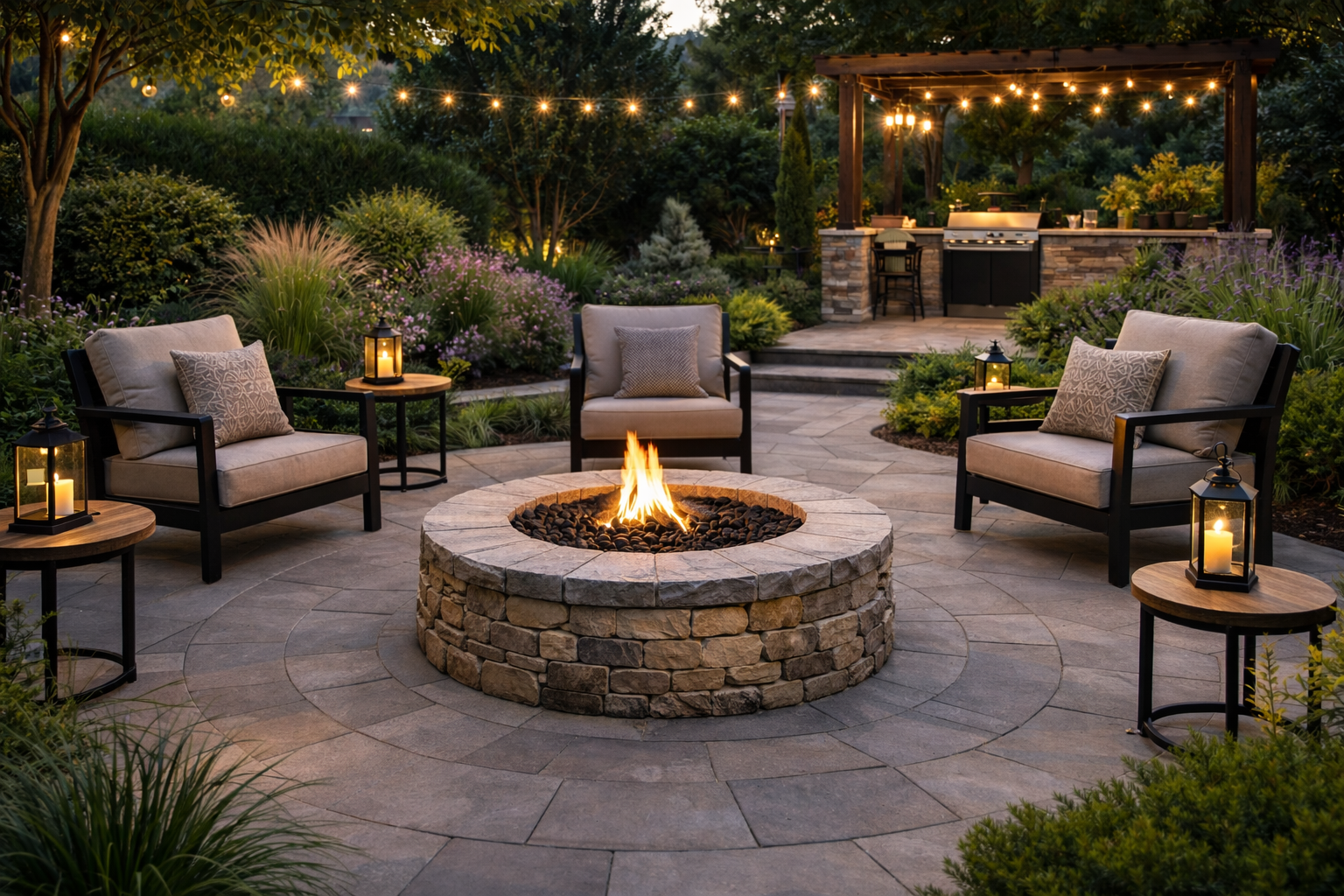
Concrete and cement have a good binding property. If you want a lasting in-built fire pit, you can go for a concrete fire pit. Let us have a look at their pros and cons.
Pros Of Concrete Fire Pits
• It gives your fire pit a sleek look with well-balanced tones and polished appeal.
• Concrete is lightweight and long-lasting.
• You will get a fire, water, scratch, and stain-resistant material for your fire pit.
• Concrete can be molded in any shape of your choice, like rectangle, square or oval.
Cons Of Concrete
• Concrete has low tensile strength and can develop cracks.
• Efflorescence is caused due to soluble salts in concrete.
2 - Natural Stone Pavers
Fire pits made from natural stone pavers have several advantages and comes in different colors, textures, and patterns. They give a natural look to your pit and are durable. However, there are some disadvantages to look into. So, let us discuss the pros and cons:
Pros Of Natural Stone Fire Pit
• You can choose from different natural stones like granite, travertine, or limestone.
• It can be set in natural soil or prebuilt concrete surface easily without much labor.
• Stone pavers are natural-looking and increase house value.
• Installation is easy and less time-consuming.
Cons Of Natural Stone Fire Pit
• Natural stone pavers are expensive and not available at all places.
• They absorb moisture leading to cracks and breakage.
3 - Metal Fire Pit
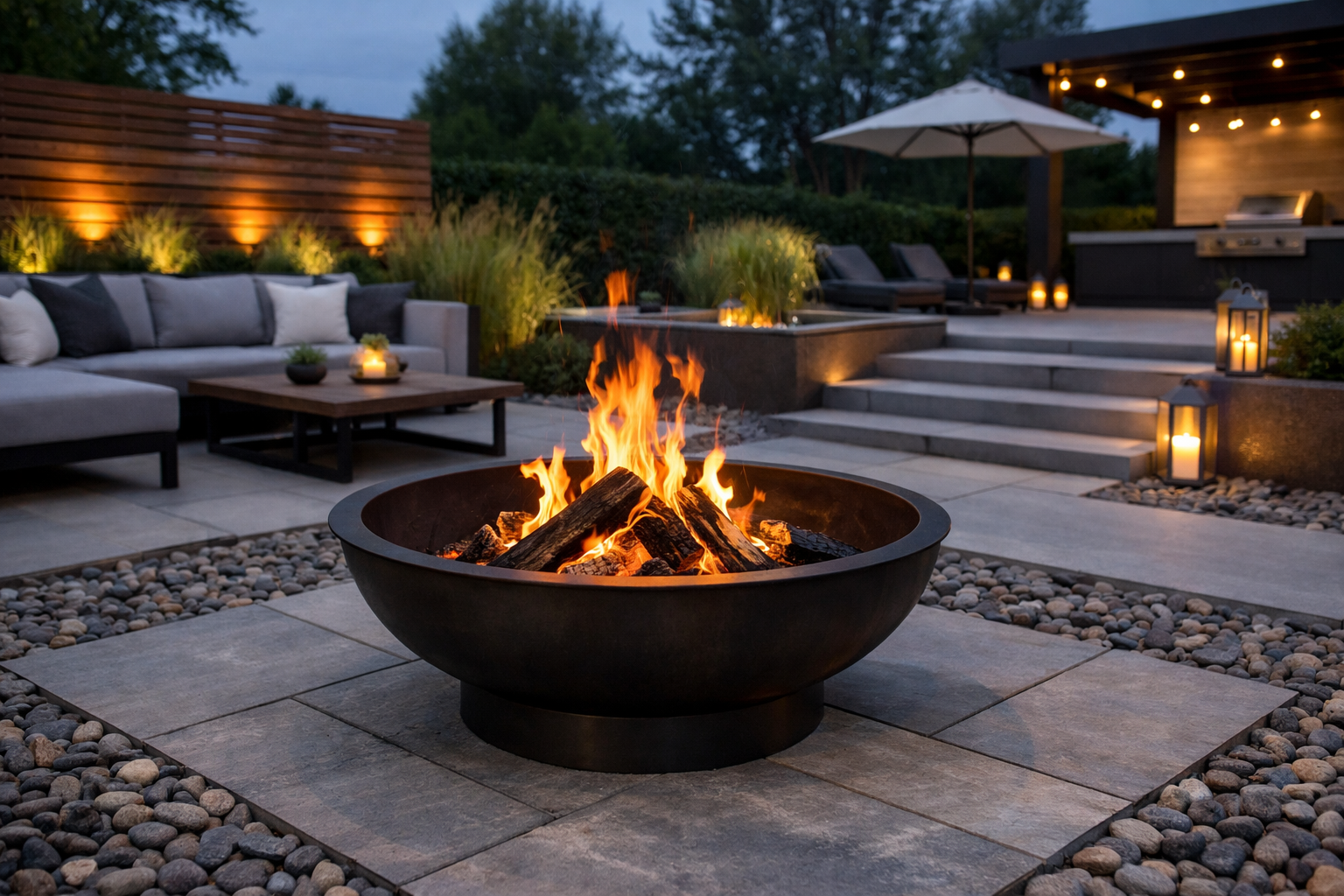
A metal fire pit is a good choice for a backyard fire pit as it is strong, weather-resistant, and inexpensive. It gives your fire pit an atheistic look and is also low maintenance. Have a look at its pros and cons:
Pros Of Metal Fire Pit
• Metal fire pits can be portable as they are lightweight.
• There is a variety to choose from, such as copper, stainless stress, and cast iron.
• Metal is easily available and affordable.
• You get access to numerable designs.
• Metal is fire resistant and can withstand harsh weather.
Cons Of Metal Fire Pit
• A metal fire pit will remain hot even when the fire is put out.
• It might look boring if your pit overall is not interesting.
4 - Limestone Fire Pits
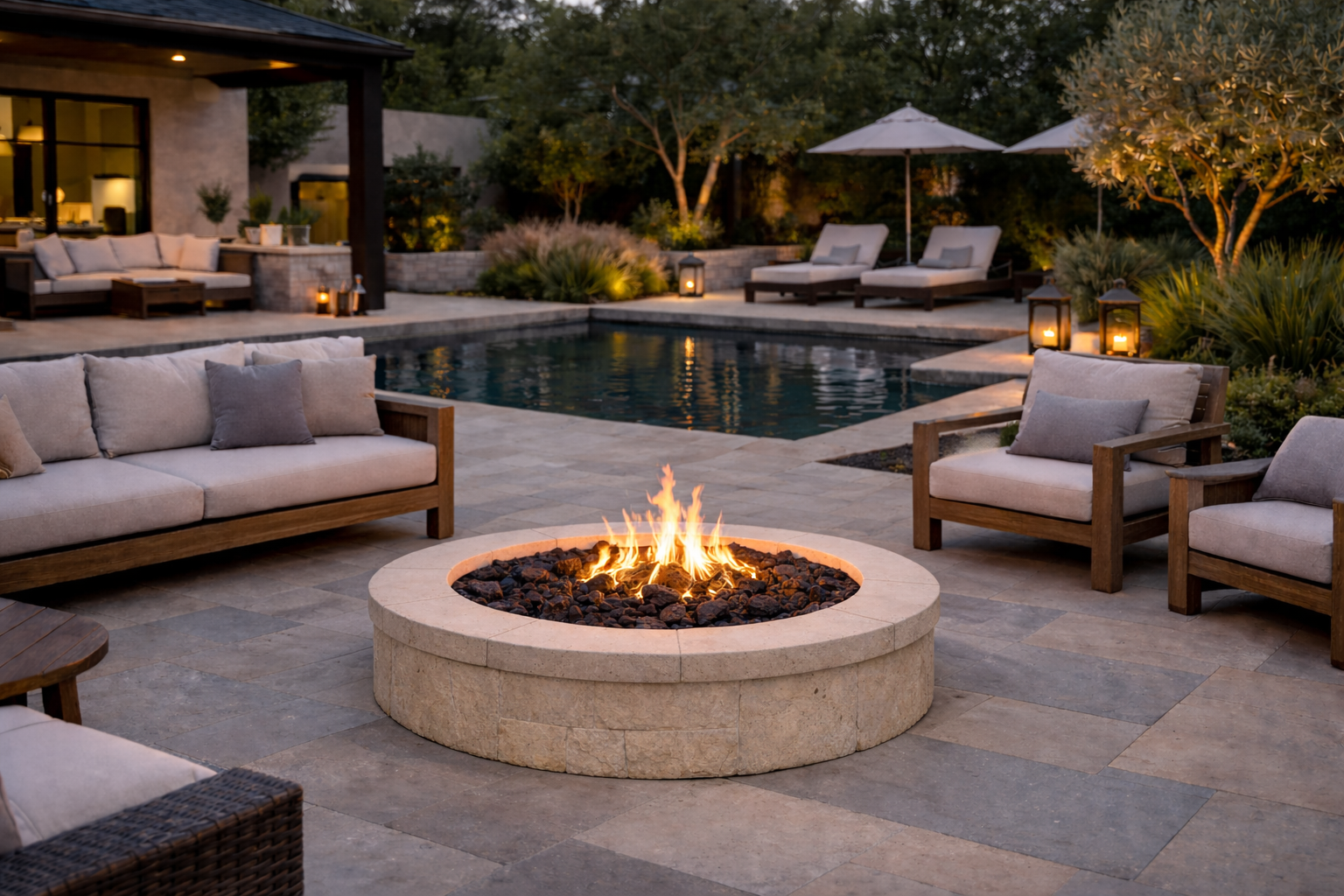
Do you plan on building a permanent in-built fire pit for your evening gatherings and warm winters? You must be looking for something more durable and versatile. Limestone is stronger than concrete fire pits and is also aesthetically appealing. Following are the pros and cons:
Pros Of Limestone Fire Pit
• A limestone fire pit blends very well with the outdoor space.
• The malleability of limestone helps in getting a range of shapes.
• It is eco-friendly and doesn’t add to your home’s carbon footprint.
• Limestone is available in several different colors like grey, blue, tan, and more!
Cons Of Limestone Fire Pit
• Limestone is not easily available.
• It is more expensive than concrete fire pits.
• Stains can be tough and showy on limestone fire pits.
Proper Seating Around The Fire Pit
Now that you know how to build a perfect fire pit, you must not forget to focus on the seating area around the fire pit. As no matter how beautiful is your fire pit, if it lacks a safe and comfortable seating arrangement, all your efforts go void. Therefore let us look at different seating ideas that you can use around the fire pit.
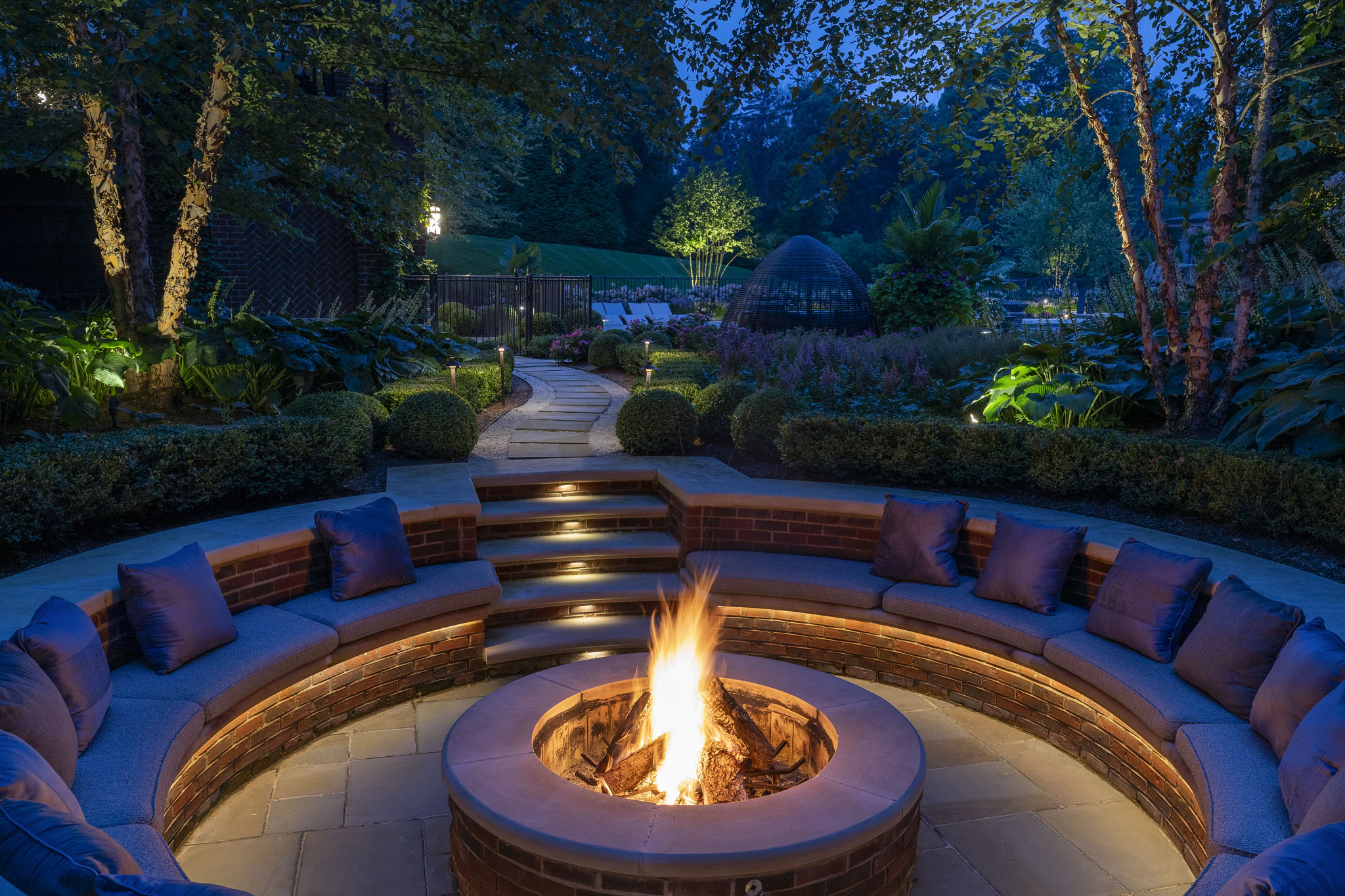
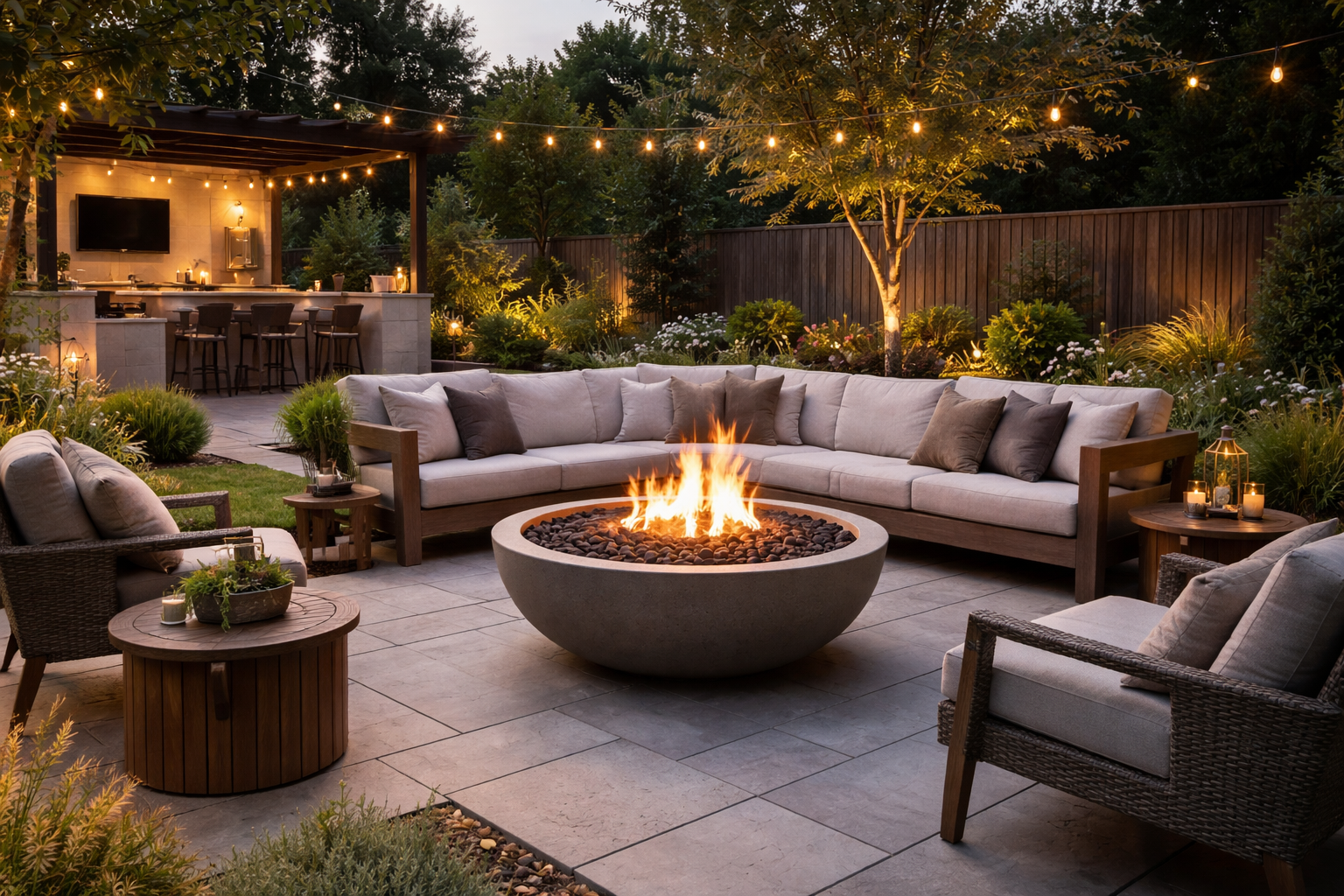
Circular Bench - If you usually organize big gatherings or your family is big, go for a circular bench. It is perfect to have deep conversations and accommodate many people at a time. It looks cozy, and also the warmth is contained.
Lounge Chair - Give a more contemporary look to your fire pit by arranging lounge chairs around it. Make them comfy with a thick cushion, and have a coffee date!
Built-in Benches – Built-in benches give more of a hardscape look. This also cements in the area as if it is part of the house footprint.
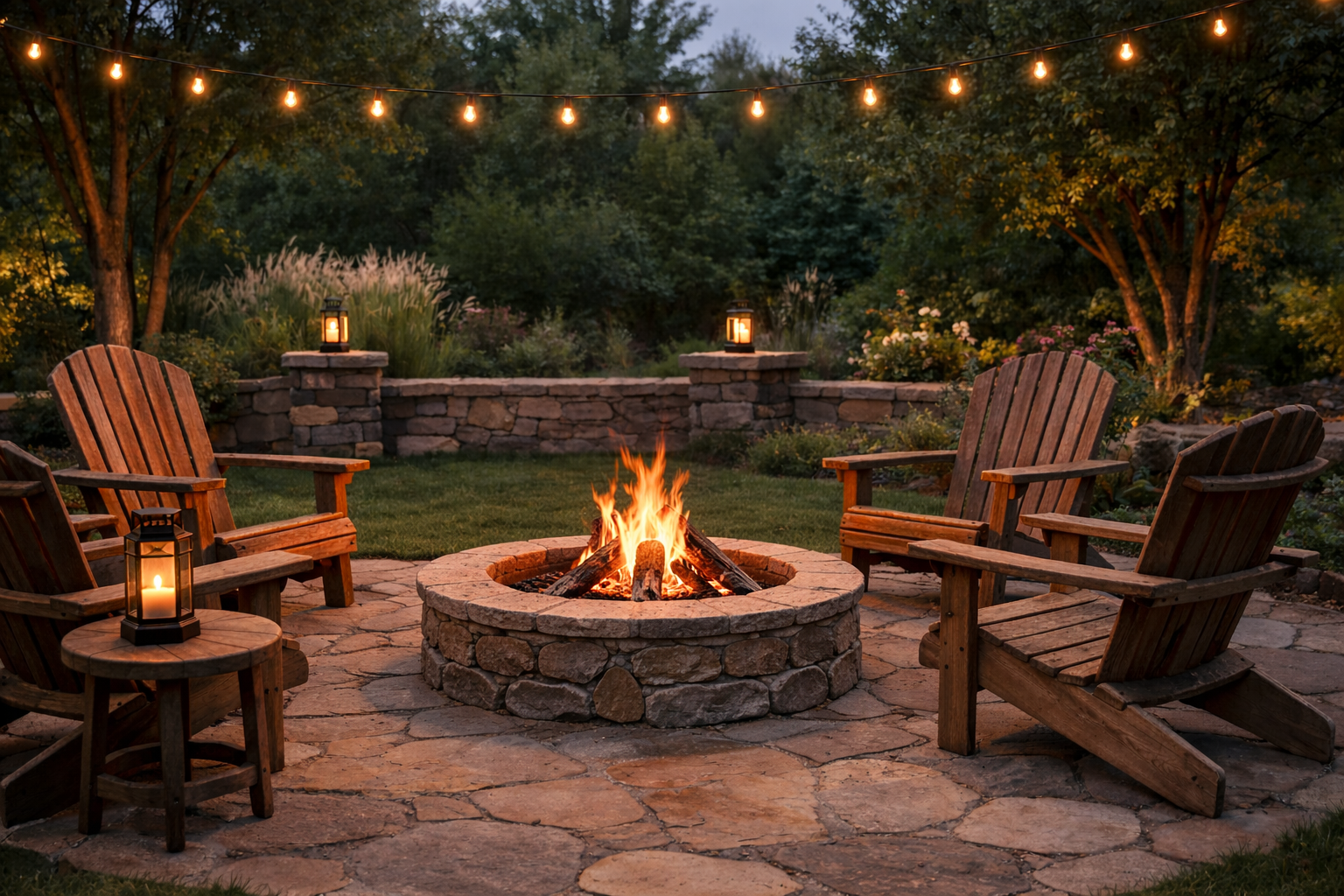
Wood Furniture - Wood furniture can never run out of style. Enrich your backyard with wooden furniture to get an old-fashioned classy look. It is affordable as well as comfortable.
Safety Rules For Fire Pit
Fire is alluring but can also be damaging. Therefore, make sure to take a follow-up on all the rules mentioned below to make your personal space safe and children-friendly:
1 - The minimum space between your home and fire pit should be 10 inches and more.
2 - Never install a fire pit right below or in the vicinity of trees.
3 - Always keep a fire extinguisher at hand for emergencies.
4 - Contact your local authorities to make sure that fire pits are allowed in your area.
5 - Do not leave the fire unattended, especially the one fuel with woods, as it is unpredictable.
6 - Be responsible while drinking alcohol near your fire pit.
Steps To Build A Fire Pit
Do you want to build a small focal point as you sit and chat with your family while enjoying roasted marshmallows? Most people think that building a fire pit is expensive or complicated, but it’s not!
It’s simple and can be done using basic tools available at your local hardware shop. Let us take you on a step-by-step journey to build a fire pit on your own.
Here’s a list of supplies that you will require:
• Gravel
• Shovel
• Mattock
• Spray paint
• Concrete stones
• Masonry adhesive
• Rubber mallet
• Other digging tools
Follow these easy steps to construct a fire pit on your own:
Step 1 - Make An Outline
Start by outlining your fire pit using spray paint. Then lay concrete stones around the circle and mark an outside circle. Remove the stones and see if the area between two circles is enough to fit in concrete stones. You can also use a metal ring to be more accurate.
Step 2 - Dig The Fire Pit
With the help of digging tools, dig the circle 6 inches deep.
Step 3 - Fill The Fire Pit
After digging the circle 6 inches deep, fill it with gravel up to ground level. This is done to provide drainage to your fire pit when it rains.
Step 4 - The Last Step
Place the first ring of concrete stones around the circumference of your gravel-filled circle. Use a rubber mallet to level the stones. Put masonry adhesive on the top of the first layer of stones. Then with precision, place the second layer of stone followed by the third.
With 4 simple steps, your fire pit is ready to be lightened. Now you can enjoy winters around your self-made fire pit
Wrapping Up
With fire pits, you can turn your regular evening into a rustic date or campfire. You must have realized the ease of building a fire pit, along with the knowledge of material and fuel to be used. However, if you want professionally built or premade portable fire pits, you have the insight of fire pits to make a perfect purchase.
If you want to check the placement of your fire pit outside your home, or are you facing trouble deciding the right location? Visit Dzinly to have a virtual view of your fire pit ideas. This way you can consider all the possibilities and choose the best. On Dzinly, you can refer to professionals for more ideas and innovations. Visualize your imagination with Dzinly and add colors to your artistry!







No comment on this post.