What Defines Craftsman Style?
Before making updates, it’s essential to understand what truly defines Craftsman design.
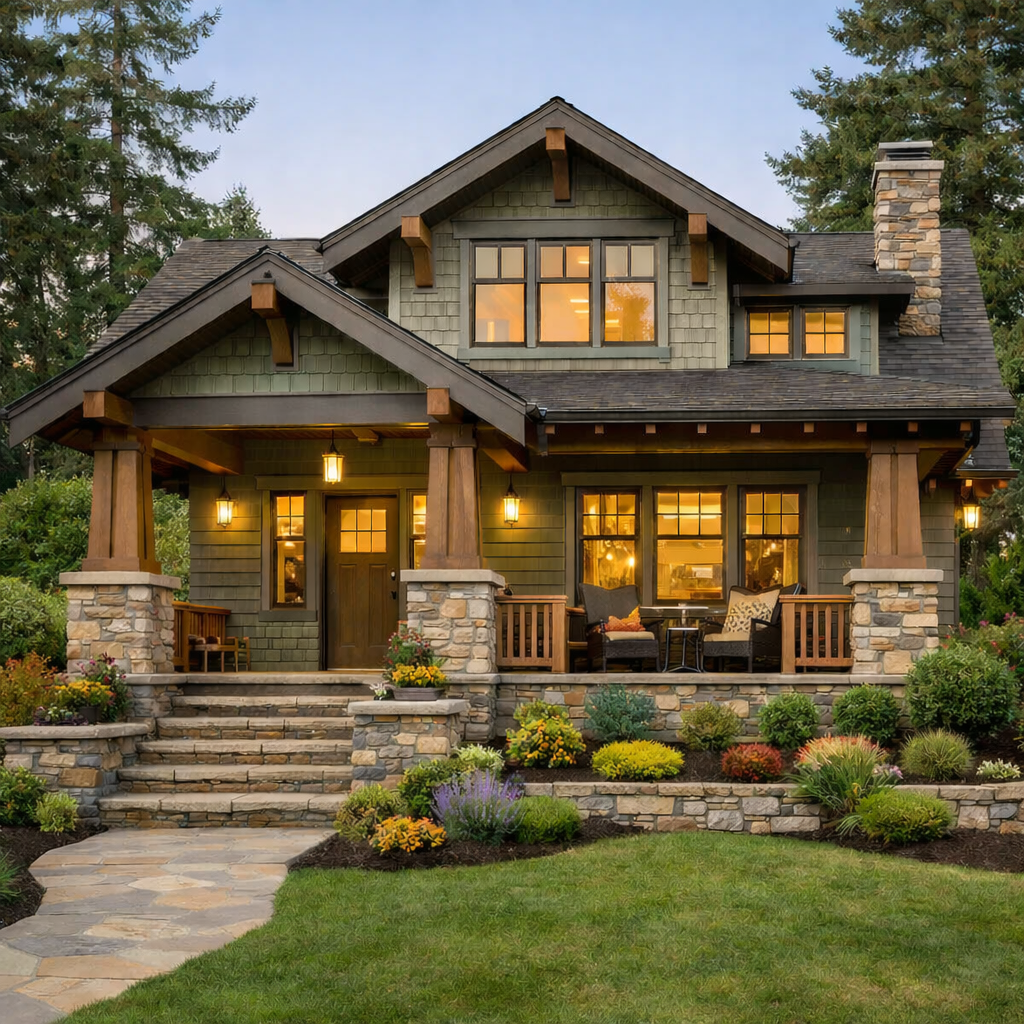
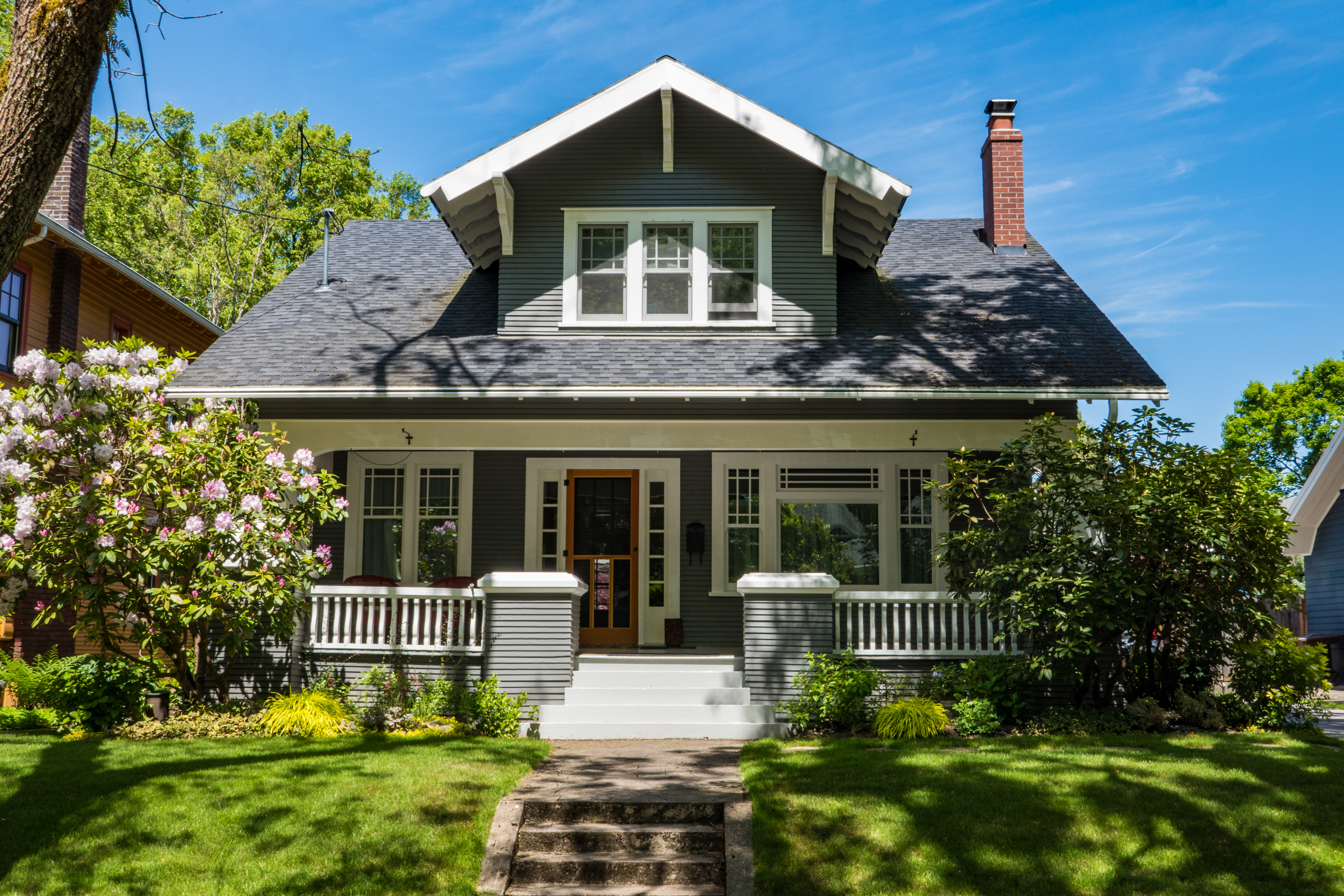
Rooted in the Arts and Crafts movement of the early 20th century, Craftsman homes emphasize simplicity, honest materials, and visible craftsmanship. The style prioritizes function, proportion, and material integrity over ornamentation.
Core characteristics of Craftsman architecture include:
- Low-pitched gabled roofs with wide overhangs
- Exposed rafter tails or decorative brackets
- Thick, tapered porch columns
- Deep front porches
- Earth-toned exterior color palettes
- Mixed natural materials like wood, stone, and shingles
- Built-in details and handcrafted trim
Many homes borrow elements of this look, but true Craftsman style relies on cohesive design and restraint—not surface decoration.
Image Source
Add a Craftsman-Inspired Front Porch
The front porch is one of the most recognizable features of Craftsman architecture. It creates a sense of welcome while visually grounding the home.
If your home already has a porch—or even a small landing—this is one of the most impactful updates you can make.
Key porch upgrades that signal Craftsman style:
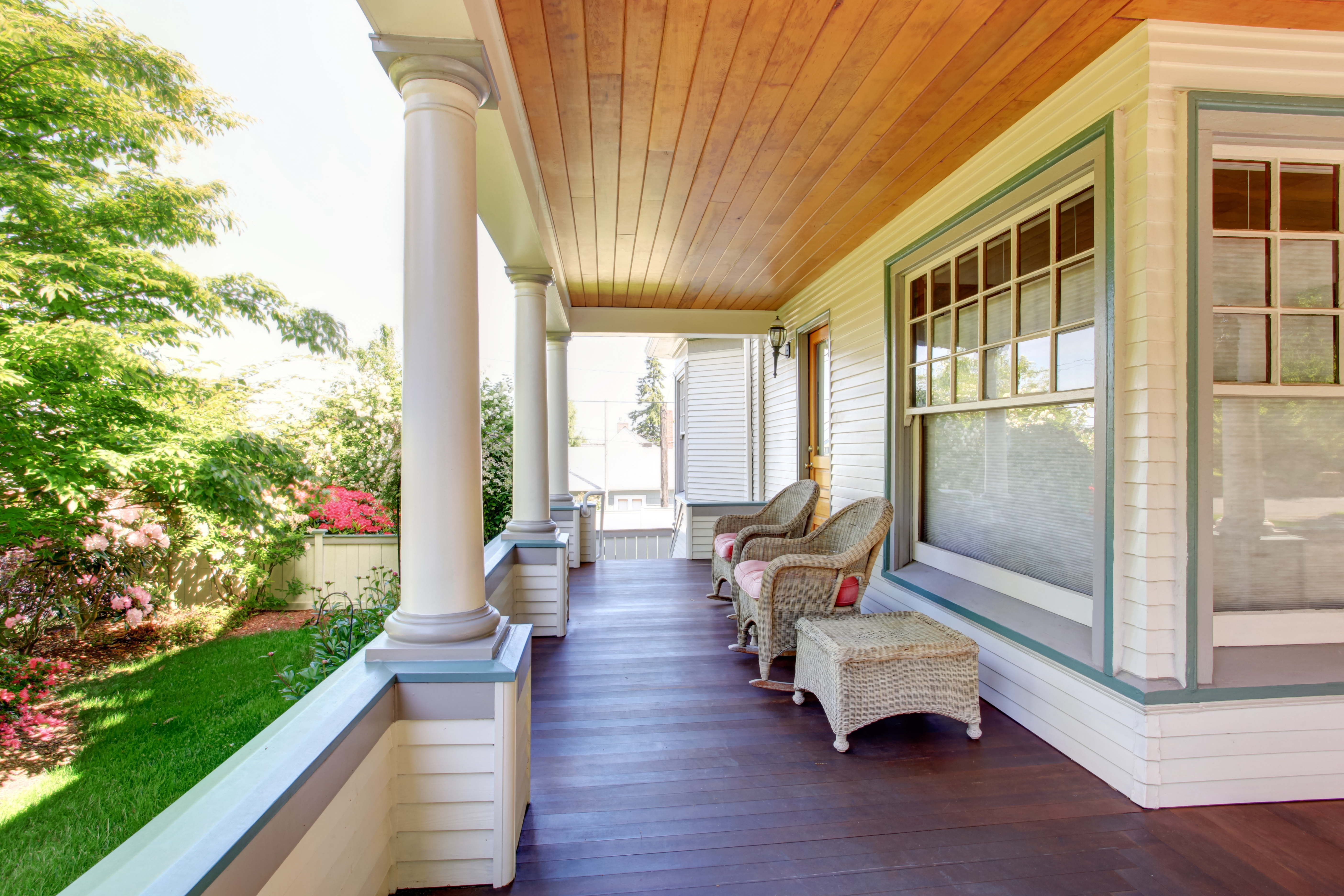
- Install tapered columns set on masonry or stone piers
- Replace basic railings with wood or stone versions
- Upgrade the ceiling with tongue-and-groove wood
- Add a porch swing, simple lantern lighting, and earthy planters
Even modest porches benefit from these changes because they reinforce proportion and craftsmanship.
If your home doesn’t have a porch:
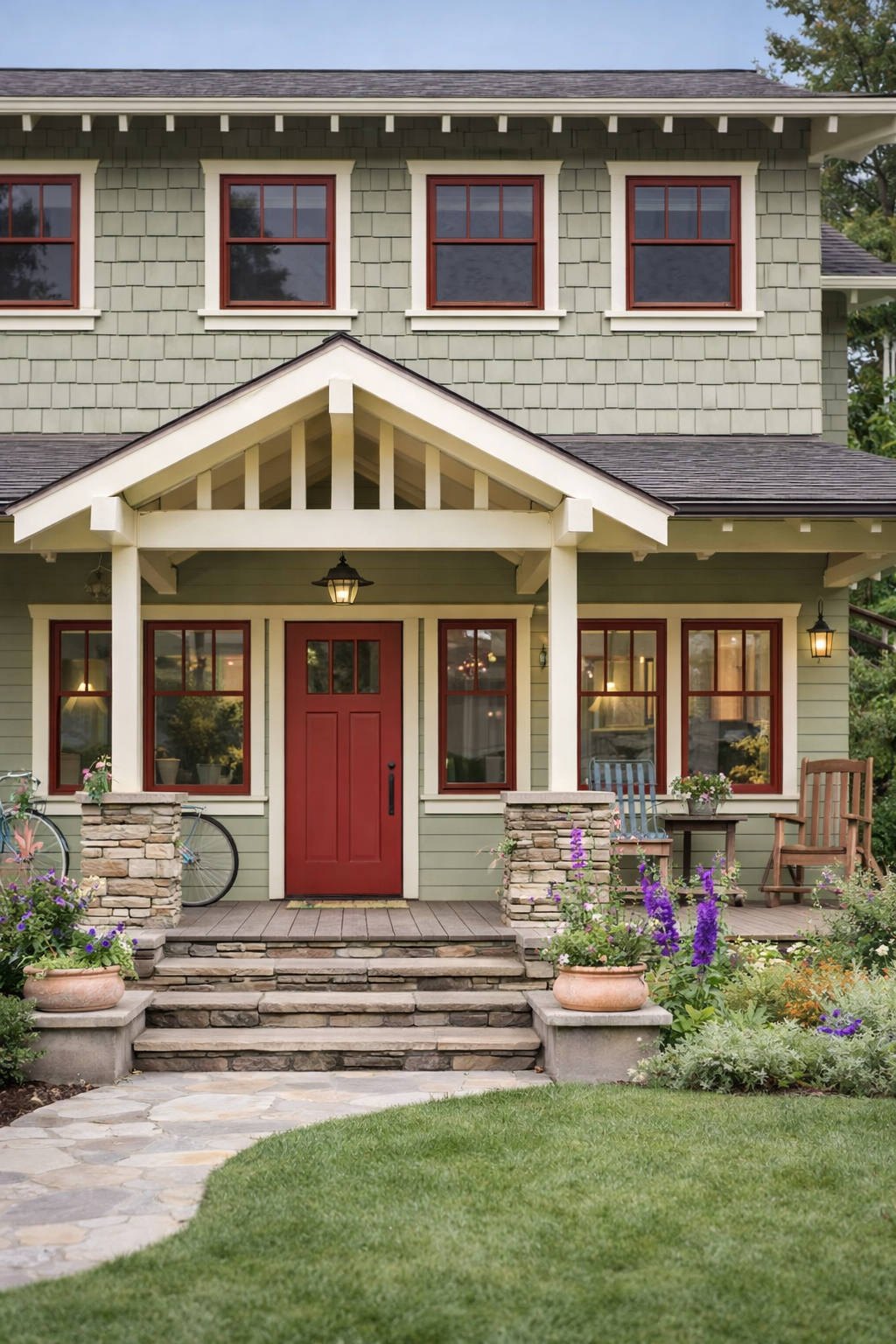
You can still create a Craftsman-style entry with corbels, thicker trim, and a small gable or overhang above the front door.
Choose Earth-Toned Exterior Colors
Craftsman homes draw directly from nature. Their color palettes are grounded, muted, and intentionally low-contrast.
Effective Craftsman color strategy:
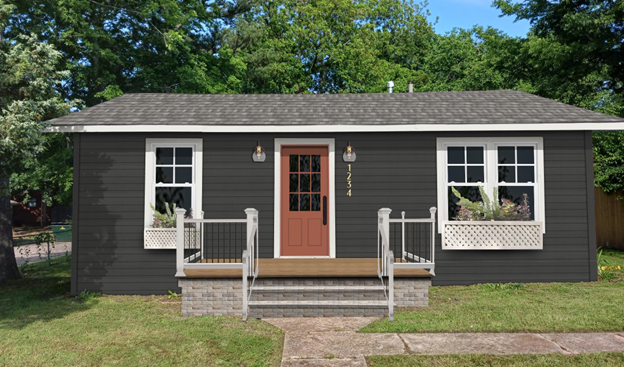
- Main body: Muted greens, olives, rusts, warm browns, or soft grays
- Trim: Creamy off-whites, warm beiges, or deeper complementary tones
- Accents: Darker shades for gables, knee braces, or porch details
Color should reinforce the architecture—not compete with it.
Examples that align with Craftsman character:
- Sherwin-Williams Roycroft Bronze Green
- Benjamin Moore Tate Olive
- Sherwin-Williams Bungalow Beige
- Benjamin Moore Hale Navy (for a modern interpretation)
Upgrade the Front Door and Entry Details
The front door is a focal point and an ideal place to introduce Craftsman detailing without overwhelming the facade.
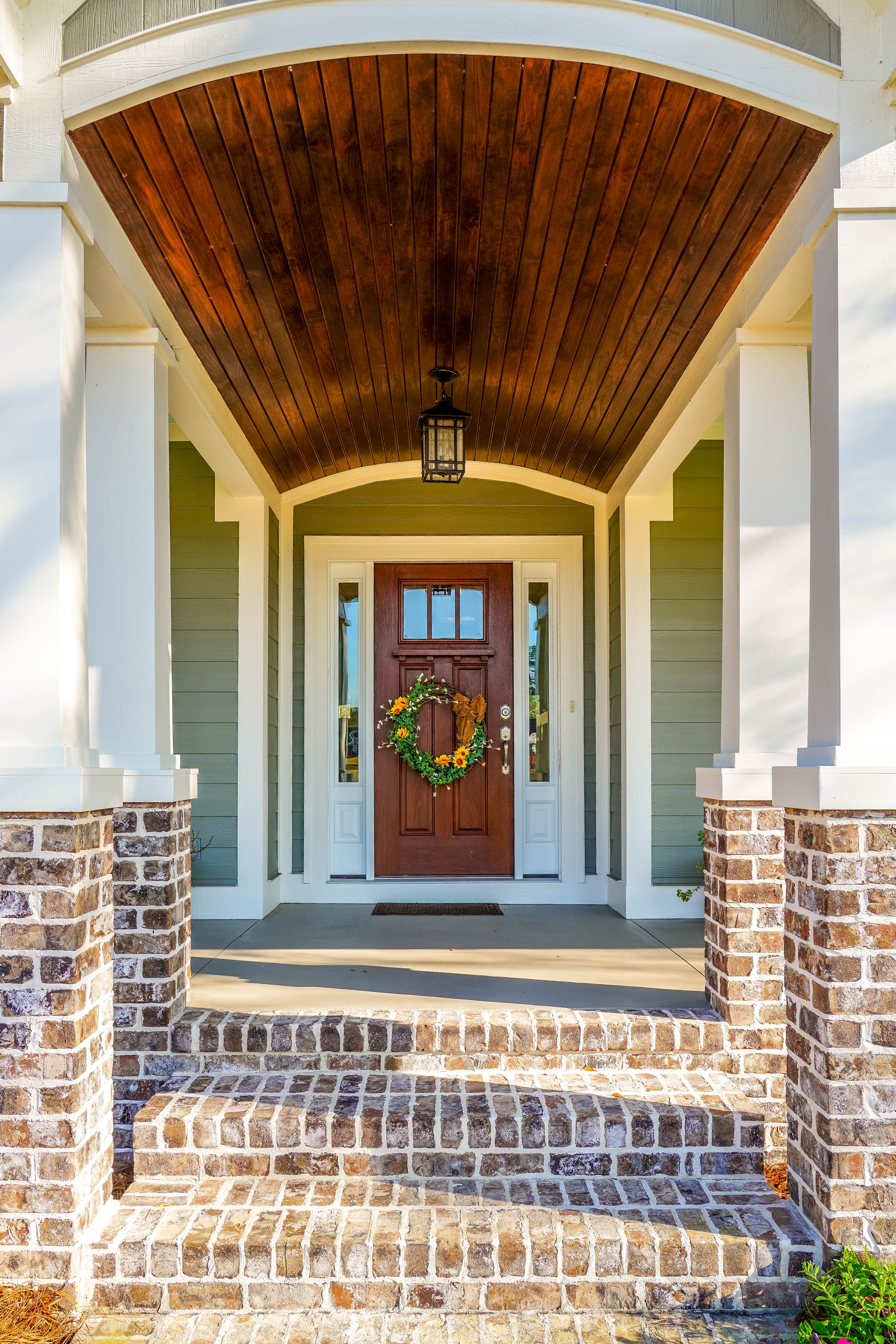
What defines a Craftsman-style front door:
- Solid wood or high-quality wood-look materials
- Simple rectangular paneling
- Three to six small windowpanes in the upper third
- Divided-light glass, clear or lightly stained
Supporting entry upgrades:
- Replace modern house numbers with classic metal or tile styles
- Install mission-style or lantern-style sconces
- Use simple black or oil-rubbed bronze hardware
These details work because they emphasize material honesty and scale.
Embrace Craftsman Trim and Millwork
One of the most defining—and often overlooked—Craftsman elements is trim.
Craftsman homes rely on thick, squared-off trim to clearly frame openings and emphasize structure rather than decoration.
Where trim makes the biggest difference:
- Layered or boxed trim around windows and doors
- Gable brackets or corbels at rooflines and overhangs
- Substantial fascia and beam details
These updates add visual weight and architectural clarity.
Key Takeaway
Authentic Craftsman exterior updates focus on structure, proportion, and material quality. The most successful changes feel intentional, restrained, and rooted in craftsmanship—not trend-driven decoration.
FAQ: Craftsman Exterior Design
What makes a home truly Craftsman style?True Craftsman homes emphasize honest materials, visible craftsmanship, and balanced proportions over decorative excess.
Can a non-Craftsman home use Craftsman elements?
Yes. Focus on trim, color, and entry details, and avoid adding too many features at once.
What exterior update makes the biggest impact?
A well-detailed front porch or entryway provides the strongest and most authentic visual change.


No comment on this post.