Weather and climate directly influence construction timelines, material performance, worker safety, and long-term durability. Rain delays excavation. Heat accelerates curing. Freeze-thaw cycles crack foundations. Humidity degrades finishes.
Projects that ignore climate conditions don’t just run late. They become more expensive, less durable, and more prone to failure.
Planning for weather is not optional. It’s structural risk management.
How Weather Delays Construction Timelines
Weather delays are predictable, but only if they are planned for.
Rain and Moisture
Heavy rain can:
- Delays excavation and grading
- Prevents proper concrete curing
- Halts roofing and exterior work
Concrete poured in saturated conditions weakens and may fail prematurely.
Extreme Heat
High temperatures can:
- Reduce labor productivity
- Accelerate asphalt softening
- Cause rapid concrete curing, leading to cracks
When concrete cures too quickly, long-term structural integrity is compromised.
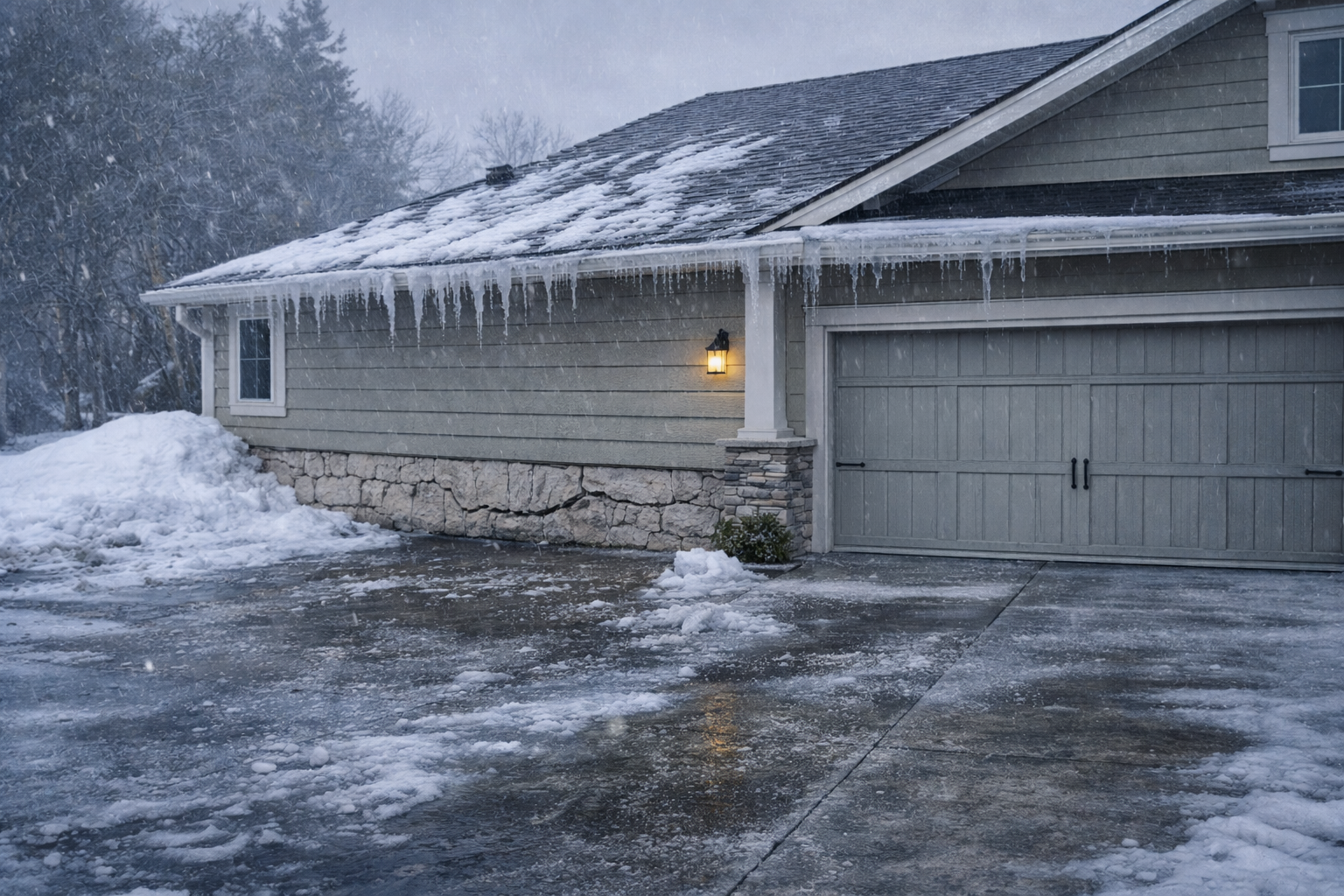
Cold and Freeze Conditions
Snow and freezing temperatures can:
- Freeze materials
- Delay supply deliveries
- Cause frost heave beneath foundations
Freeze-thaw cycles expand and contract soil, leading to foundation movement.
Preventative Scheduling Strategies:
- Build weather buffers into timelines
- Schedule concrete pours in moderate temperatures
- Complete roofing before rainy seasons
- Use temporary weather protection systems
Proactive planning prevents reactive delays.
How Climate Impacts Building Materials
Climate determines how long materials last and whether they fail early.
Wood in Different Climates
- Humid climates: Wood absorbs moisture, leading to warping, swelling, and rot
- Arid climates: Wood dries out, cracks, and shrinks
Material performance is directly tied to environmental exposure.
Metal in Coastal Regions
Salt air accelerates corrosion. Unprotected steel can begin rusting within months.
Best practices:
- Use stainless steel
- Choose galvanized metals
- Apply protective coatings
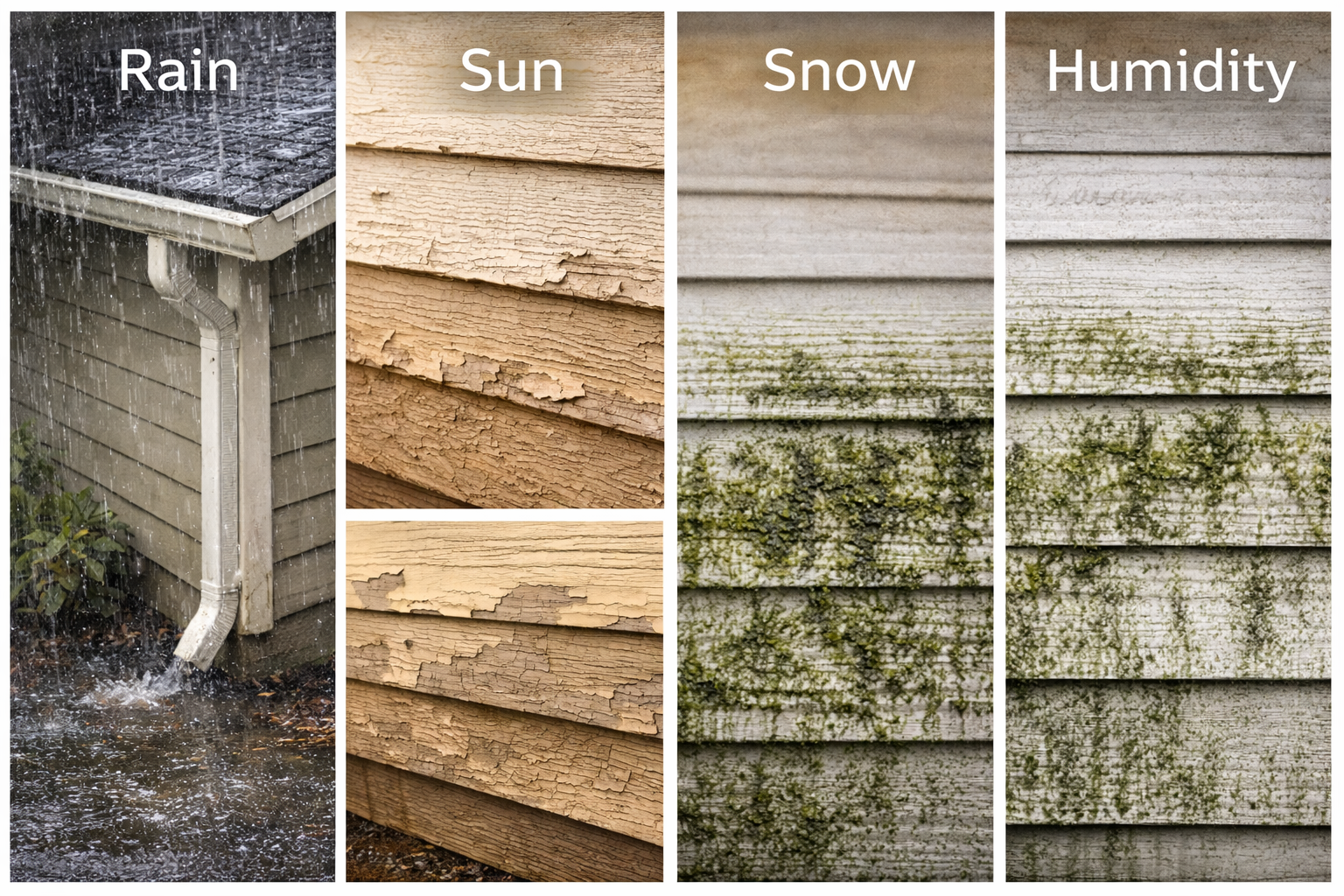
Paint and Exterior Finishes
- Heat and UV exposure cause fading and peeling
- Humidity prevents proper curing and encourages mildew
Finishes applied under poor weather conditions fail faster and require earlier replacement.
Climate-Responsive Material Strategy
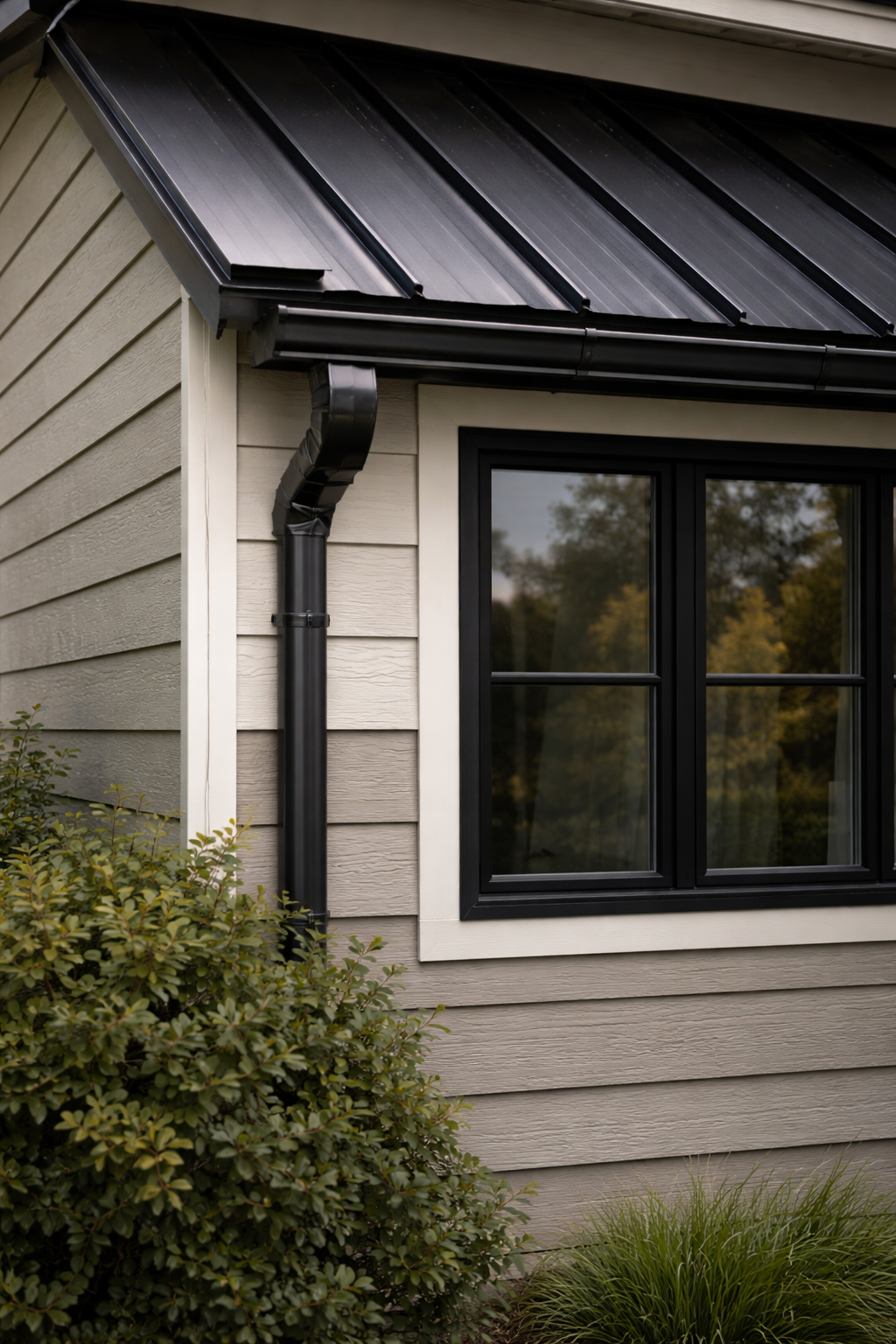
- Use moisture-resistant siding
- Select corrosion-resistant hardware
- Store materials in controlled environments
- Apply UV-resistant sealants in high-sun regions
Durability starts with matching materials to the environment.
Foundation Stability and Site Preparation
Foundations fail when soil movement is ignored.
Soil Expansion and Shrinkage
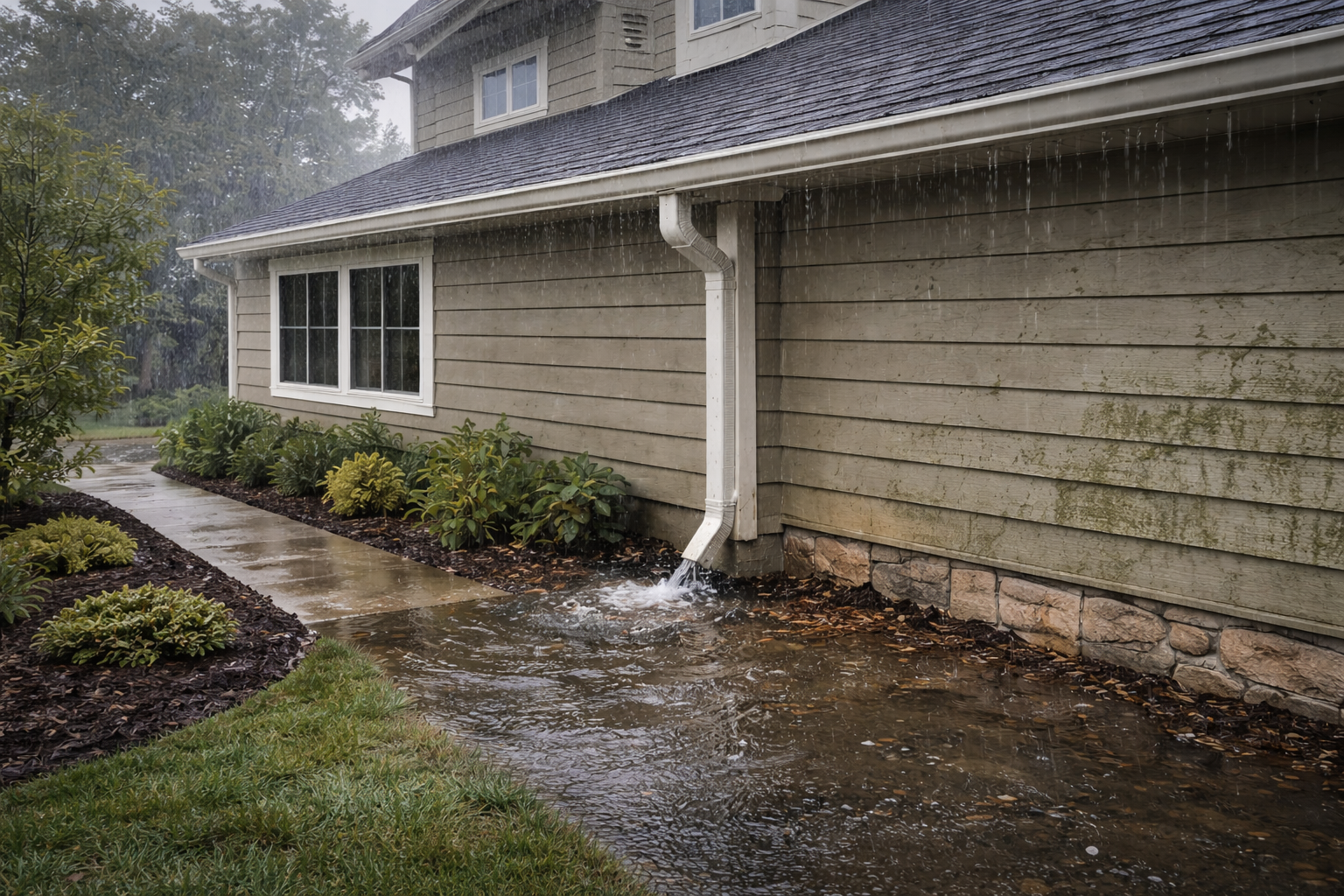
- Heavy rain causes erosion and delays excavation
- Drought leads to soil shrinkage, cracking, and settlement
- Freeze-thaw cycles shift soil and create structural movement
Soil behavior is driven by climate conditions.
Foundation Protection Strategies:
- Conduct professional soil analysis
- Stabilize soil when necessary
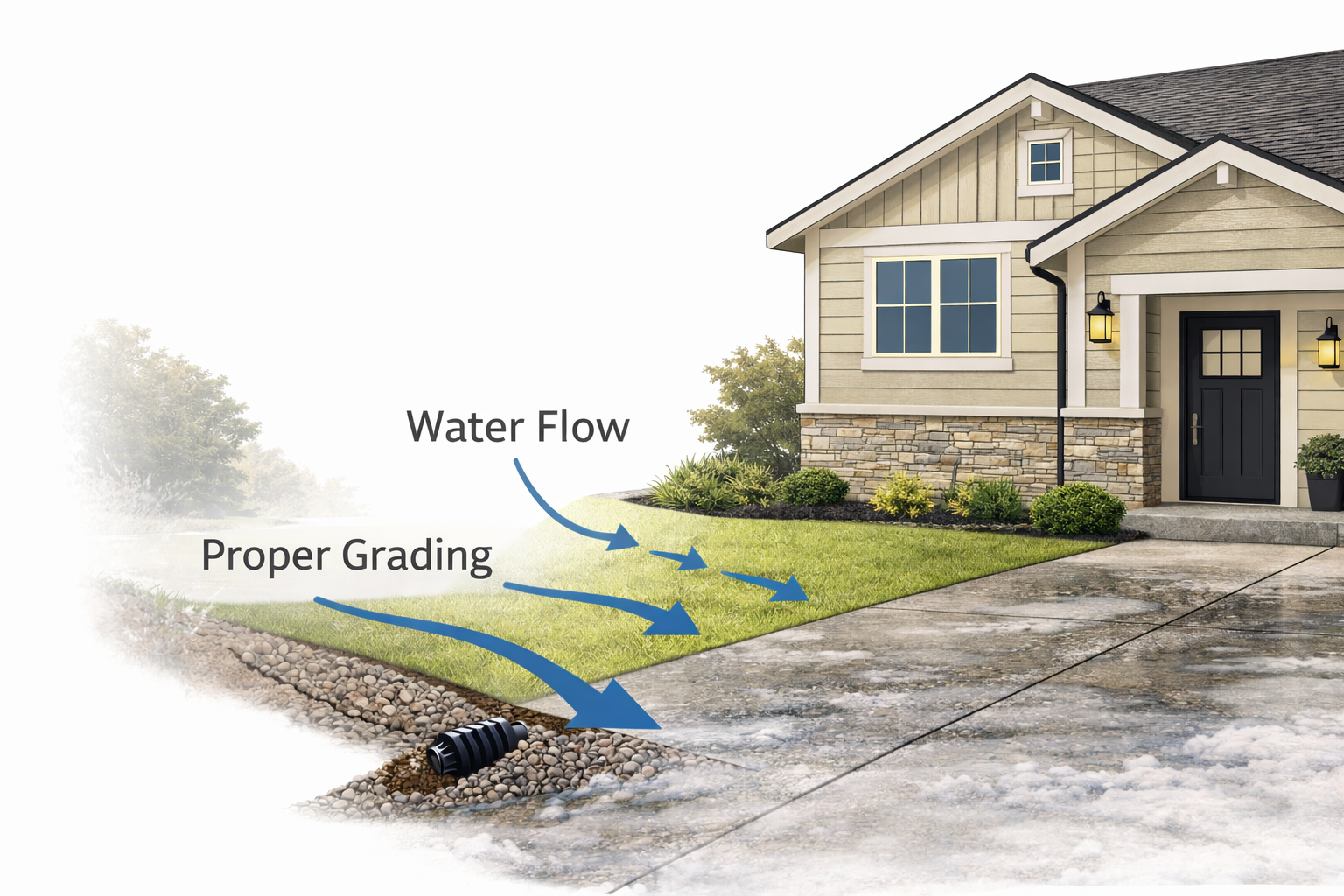
- Install proper grading and drainage
- Use frost-protected foundations in cold regions
- Elevate structures in flood-prone areas
Foundation integrity starts before the first pour.
Worker Health and Safety in Extreme Weather
Weather directly affects labor performance, safety, and productivity.
Heat Risks:
- Heat exhaustion
- Heatstroke
- Dehydration
Cold Risks:
- Frostbite
- Hypothermia
- Slipping hazards
Protective Measures:
- Adjust work hours during temperature extremes
- Provide appropriate protective gear
- Ensure hydration and warming access
- Conduct regular safety training
Protecting workers reduces delays, liability, and costly interruptions.
Climate-Responsive Design and Long-Term Efficiency
Climate doesn’t just affect construction. It determines how a building performs for decades.
Hot Climates:
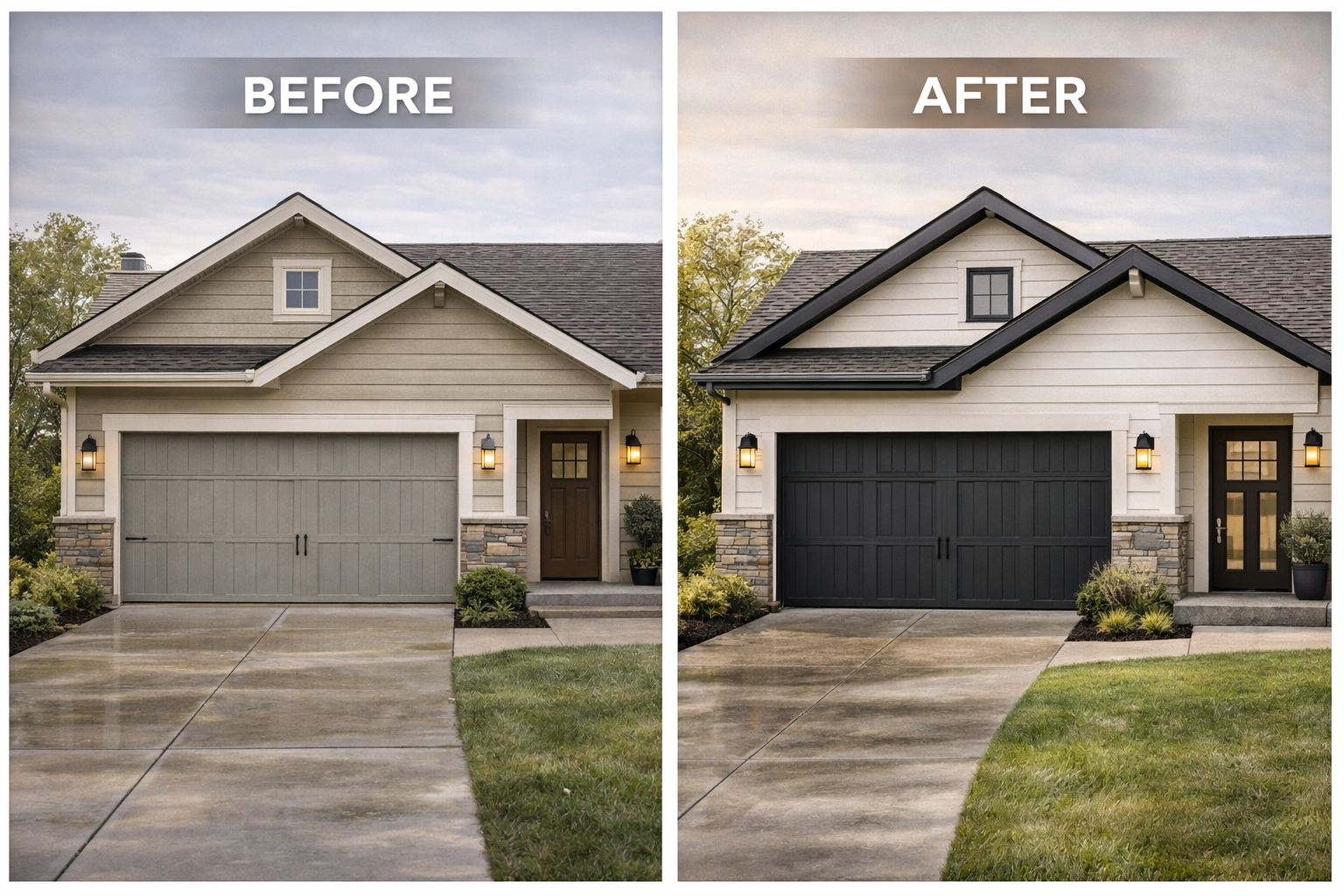
- Reflective or light-colored exteriors
- Cross-ventilation design
- Large overhangs for shade
- Solar-ready roofing
Cold Climates:
- Airtight construction
- High-performance insulation
- Solar orientation for passive heat gain
Coastal Climates
- Sealed building envelopes
- Corrosion-resistant materials
- Elevated foundations
Energy efficiency is determined at the design stage, not after construction.
Key Takeaways
- Weather directly impacts construction schedules and costs
- Climate determines material lifespan and performance
- Soil movement is driven by environmental conditions
- Worker safety must adapt to extreme temperatures
- Long-term building efficiency starts with climate-responsive design
Frequently Asked Questions
How does weather affect construction timelines?
- Weather delays excavation, curing, roofing, and finishing. Rain, heat, and freezing temperatures can halt progress and weaken materials.
What materials perform best in humid climates?
- Moisture-resistant materials like treated lumber, composites, and corrosion-resistant metals perform best.
Why is soil testing important before construction?
- It identifies load capacity and movement risks, preventing foundation cracking from expansion, shrinkage, or freeze-thaw cycles.
How can builders reduce weather-related delays?
- By planning around seasonal patterns, adding buffer time, using protective systems, and selecting climate-appropriate materials.
Final Thoughts
Here’s the reality most people underestimate: weather isn’t a variable, it’s a constant.
The difference between a project that runs smoothly and one that spirals into delays and cost overruns usually comes down to one thing, how well climate was considered upfront.
Smart construction isn’t just about design or materials. It’s about anticipating the environment those materials have to survive in.
Plan for the conditions, build for the long term, and you avoid the kind of problems that show up years later when it’s far more expensive to fix.




No comment on this post.