There are many different styles of exterior home design. Modern and California Modern offer two distinct styles with different elements, yet some similarities. Modern design is characterized by an emphasis on form, appreciation of natural materials, and the use of clean, straight lines. California Modern is a softer design, with more use of textures. If you are unsure of which one to choose for your house, read on to find out the major differences.
What is Modern Design?
Modern style design and décor uses natural or neutral colors and materials and has a very minimalist approach to details. With nods to German and Scandinavian architecture and design, this movement first began around the 1920’s and continued to grow in popularity during the first half of the 20th century.
Modern style is simple and unadorned and follows the principle that form follows function. Therefore, the design reflects the intended purpose. It can be characterized by the following:
- Use of rectangles or other geometric shapes
- Lack of adornment
- Asymmetrical design
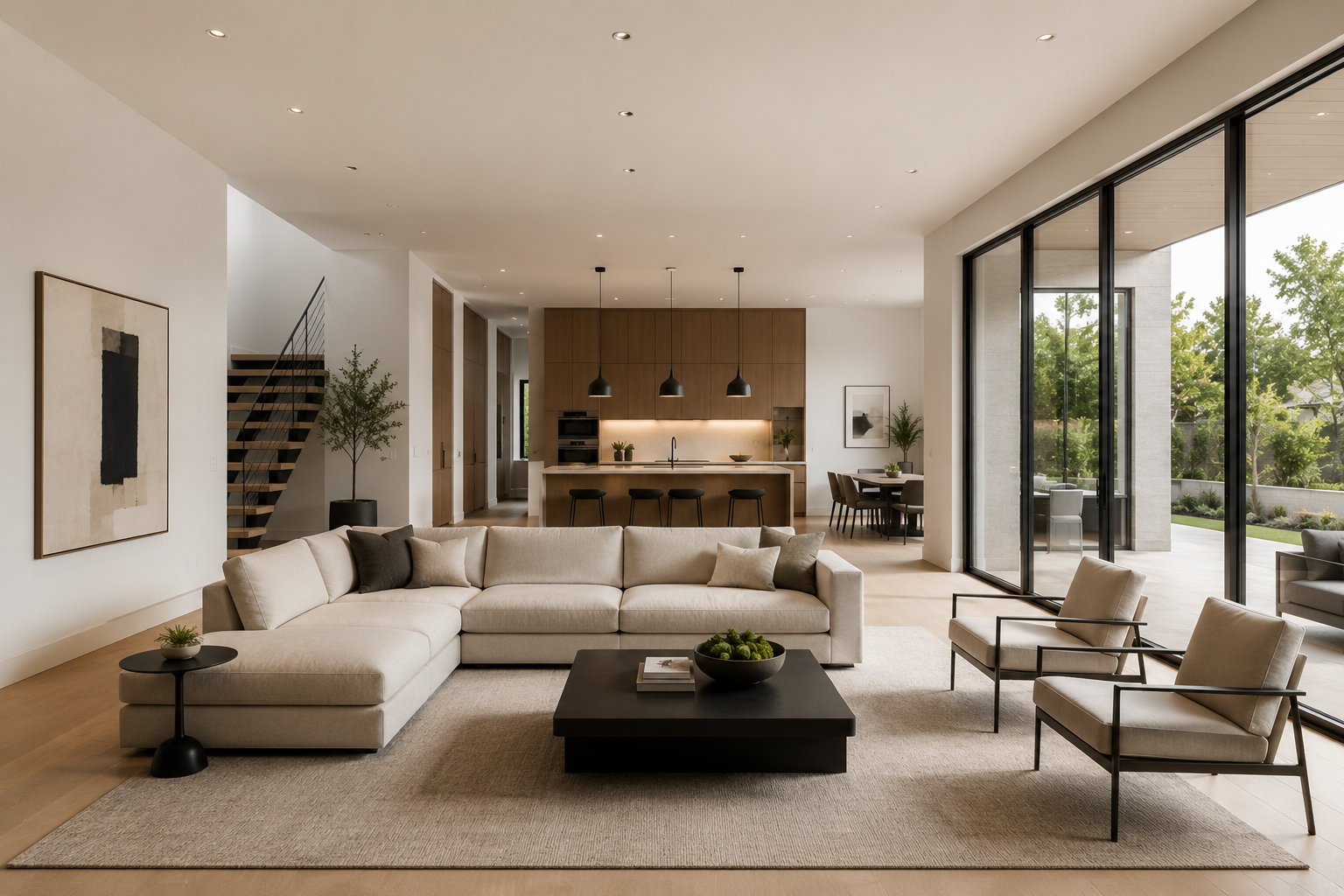
- Open floor plans
- Low, horizontal architecture
- Large glass windows
- Use of natural materials like wood
- Whitewashed exteriors
On the exterior of the home, modern style has strong horizontal and vertical lines, which usually create a sense of height. Sometimes a modern home stands out against the surroundings while other times it is built to blend with the natural surroundings. The goal of modern design is an emphasis on function without any unnecessary adornment. The architecture is simple, clean, with straight lines.
Characteristics of Modern Design
There are several elements that constitute the majority of modern homes:
Structural Elements:
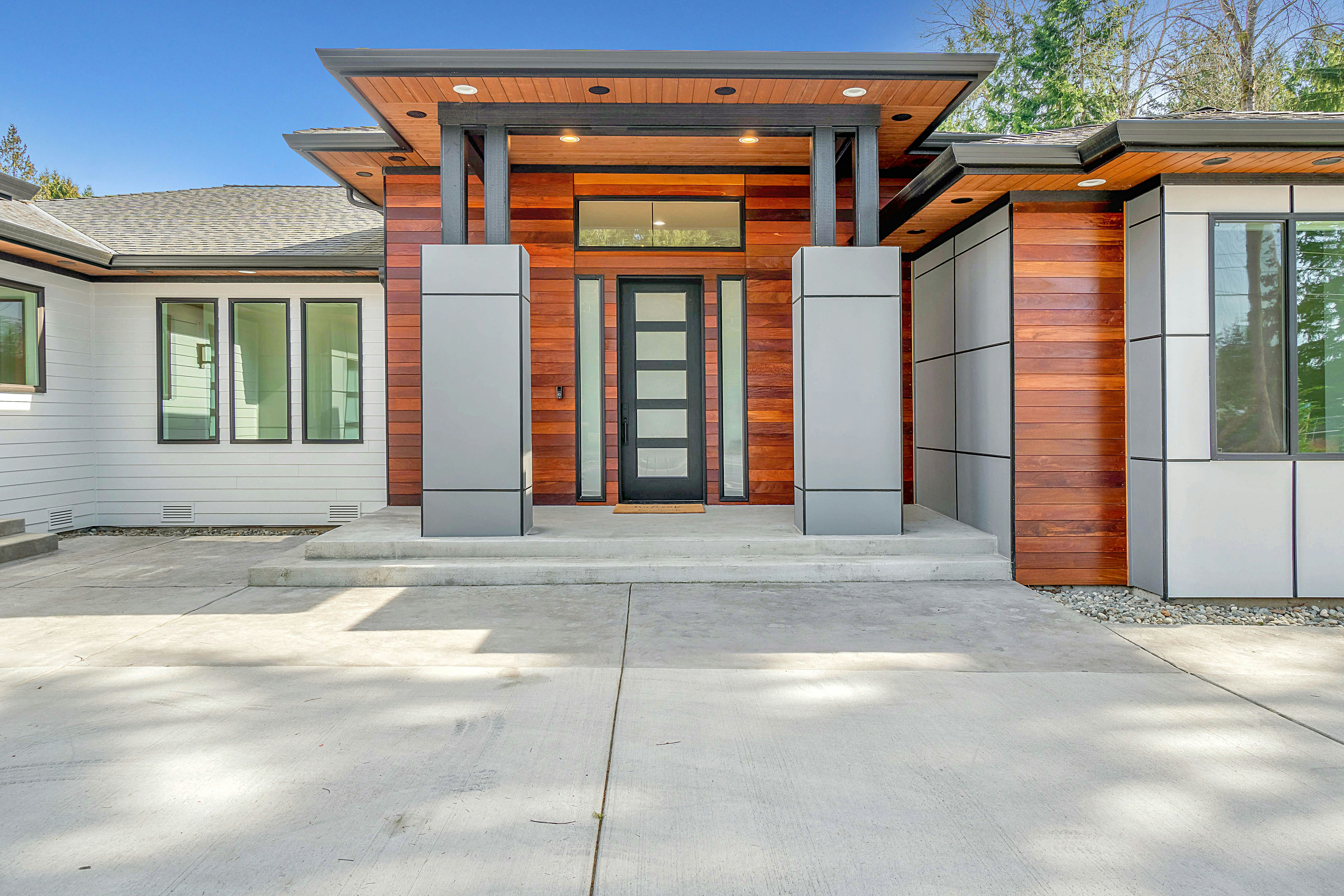
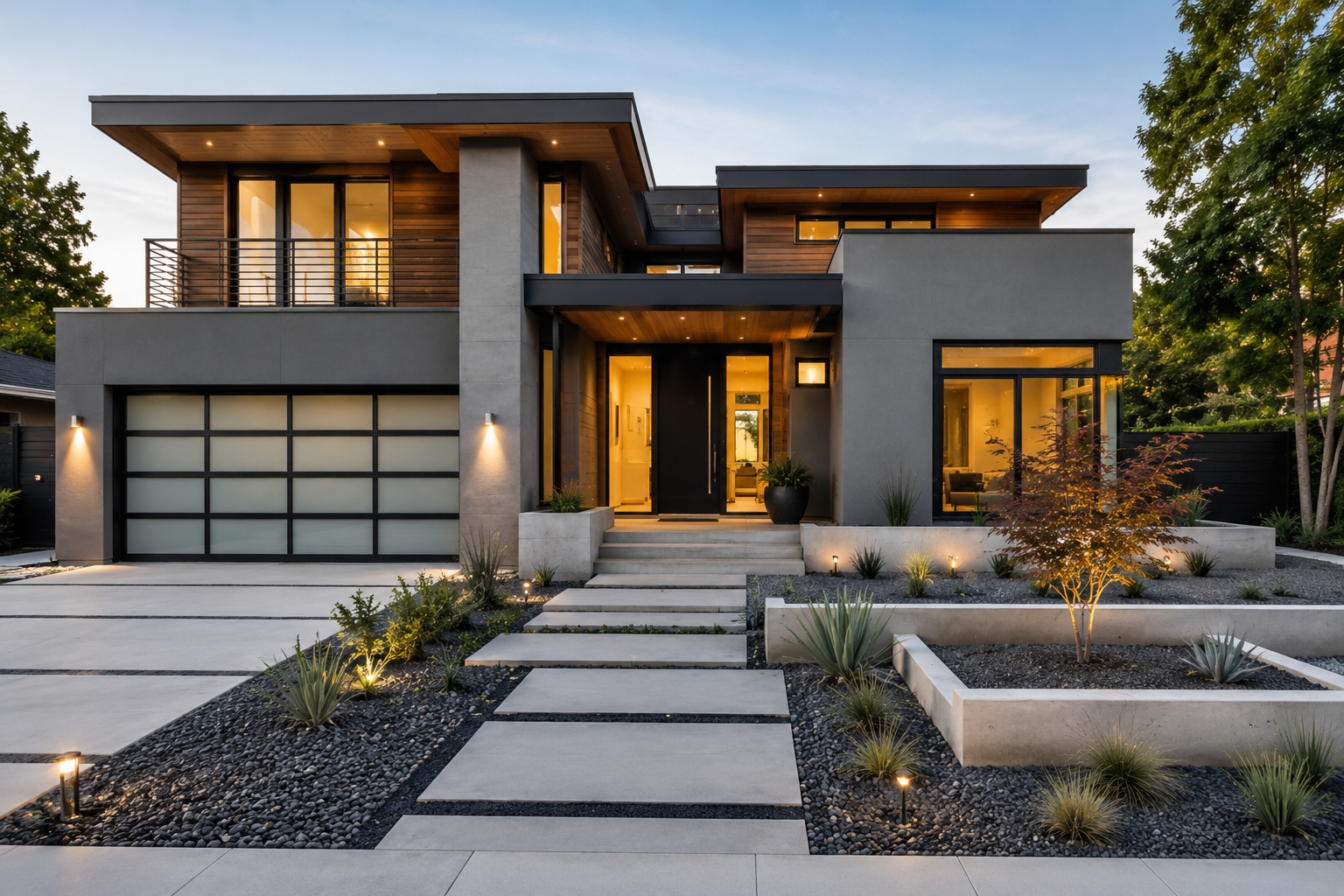
Modern design leaves structural elements on the exterior exposed. Concrete beams or wood columns are left in their natural state. The emphasis is on horizontal and vertical lines with few curves. Clean lines and geometric shapes are used throughout the design. There are no ornate columns or arches, window shutters or ornamentation. Modern interiors and exteriors often include geometric shapes. The minimalist nature of this style means that homes exteriors feature sharp angles that are the focal point of the architecture.
Natural Materials:
On the exterior of the home, natural materials such as natural, unpainted wood and metals are used. Reflective surfaces such as steel, chrome, and glass are also found in this type of home. All materials are smooth and often longboard flat panels are used on the exterior of the house. If stone is used, it is usually cut in clean lines or in rectangular shapes.
Roof:
Most modern homes have very simple roofs. The roof in a modern home is rarely pitched. Instead, it is flat and squared off. It is usually a dark color that does not take away from any of the architecture.
Color Palette:
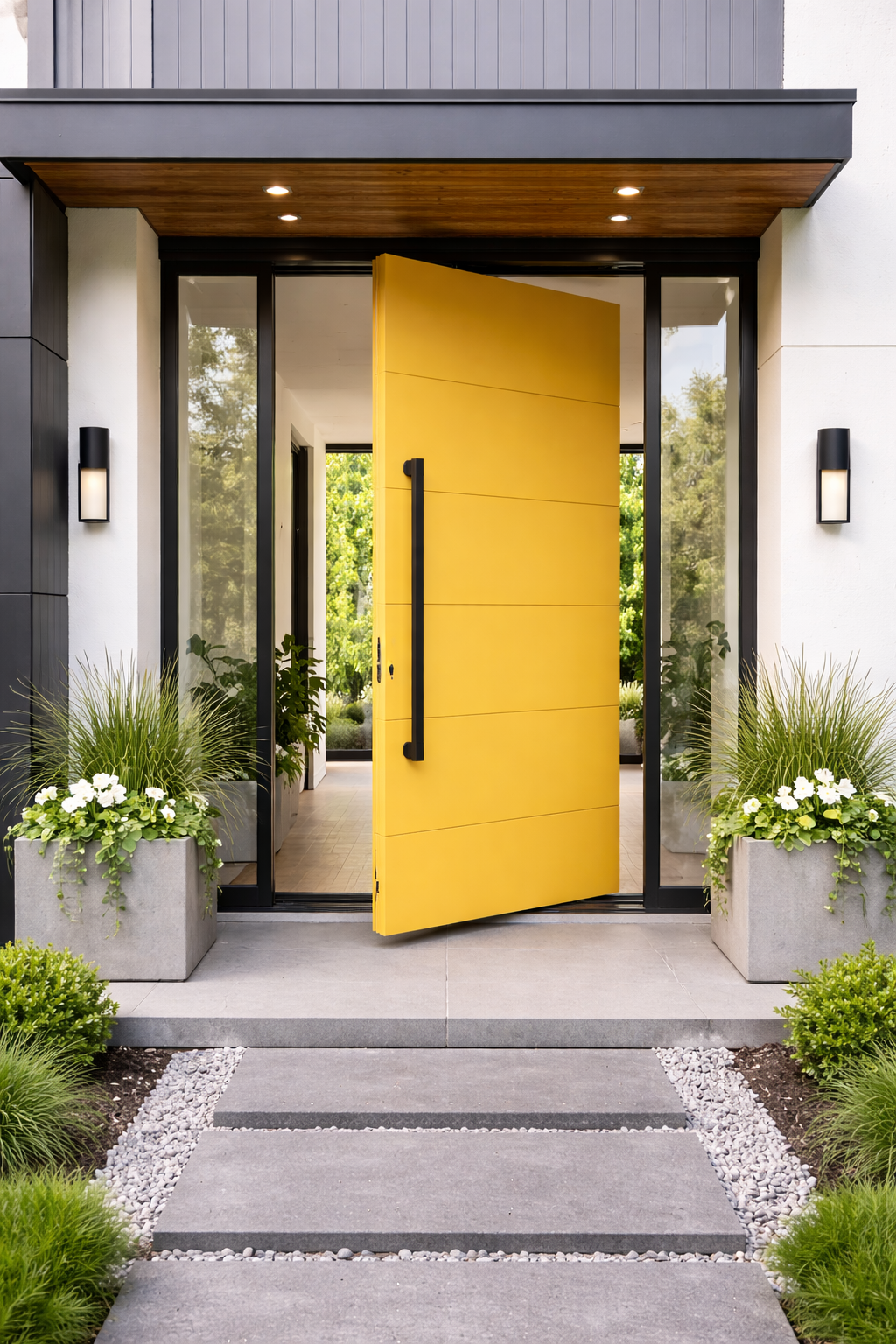
The color palette in a Modern design is often monochromatic in neutral or natural tones. Most modern color schemes mix shades together. For example, earth tones offer an organic and neutral background that have undertones of brown, gray or black. Other natural elements like stained wood furniture or natural fiber rubs often play off of this monochromatic color scheme. Modern design also includes colors from international influences, which can be bright hues or accents, such as a bright orange front door. However, they are usually used minimally.
The color palette also uses natural untreated colors for the exterior of the home. Raw concrete and natural stone combined with muted paint tones like gray or white can come off as serene. The modern home uses colors to emphasize its architectural elements like lines, angles, large windows, and a mix of materials.
Landscaping:
Similar to the design of the home, the landscaping is edgy and squared off. However, modern landscaping is not only about aesthetics. Sustainability is also an important factor, which is incorporated into landscaping choices. Depending on the location and climate, the landscaping features walkways and pavers and more hardscaping than greenery and plants. Mulch, gravel, or rocks often covers a large area of the design so plants that flourish in this environment are best.
Natural Light:
One of the most desirable features of Modern design houses are the large, unadorned windows. Many times, one large feature window is accompanied by several smaller windows on the façade of the home. They are not necessarily symmetrical. The large windows can have accent trim or flashing for effect, and usually remain unadorned to allow the maximum amount of light in. The simplicity of the building design along with large windows of different sizes and shapes also helps to bring the natural environment inside. The natural sunlight that is let into the home from the windows will fill any room and make it feel larger.
Uncluttered Spaces:
Modern homes are open and uncluttered. Most walls are left bare, with not much in the way of adornment. The décor has very little in the way of decoration and is rather for function only. Furniture pieces for example are functional and kept to a minimum. The lack of decoration creates larger and more open spaces within the home.
What is California Modern Design?
In contrast, California Modern is a style that came about from iconic American designs of Charles and Ray Eames and continued through the 1960’s. The mid-century modern movement found its roots in California especially when it came to residential architecture. California Modern, however, has evolved over time and continues to do so today. Similar to modern style, there is an emphasis on function as a form. But it is accomplished in a casual and warmer way.
California Modern matches the lifestyle of its origins---calming, friendly, and welcoming. It is considered a subset of Modern Rustic, with a mix of natural, organic, and modern edge with a bit of eclectic. The look of this style is relaxed but put together at the same time.
Characteristics of California Modern
This style includes the following design elements:
Bold touches:
Both inside and outside of the home, California Modern adds to modern style by incorporating bold touches or one-of-a-kind design pieces. Accents in mustard yellow, bright orange, or deep chartreuse are on trend but should be used sparingly.
Natural Materials:
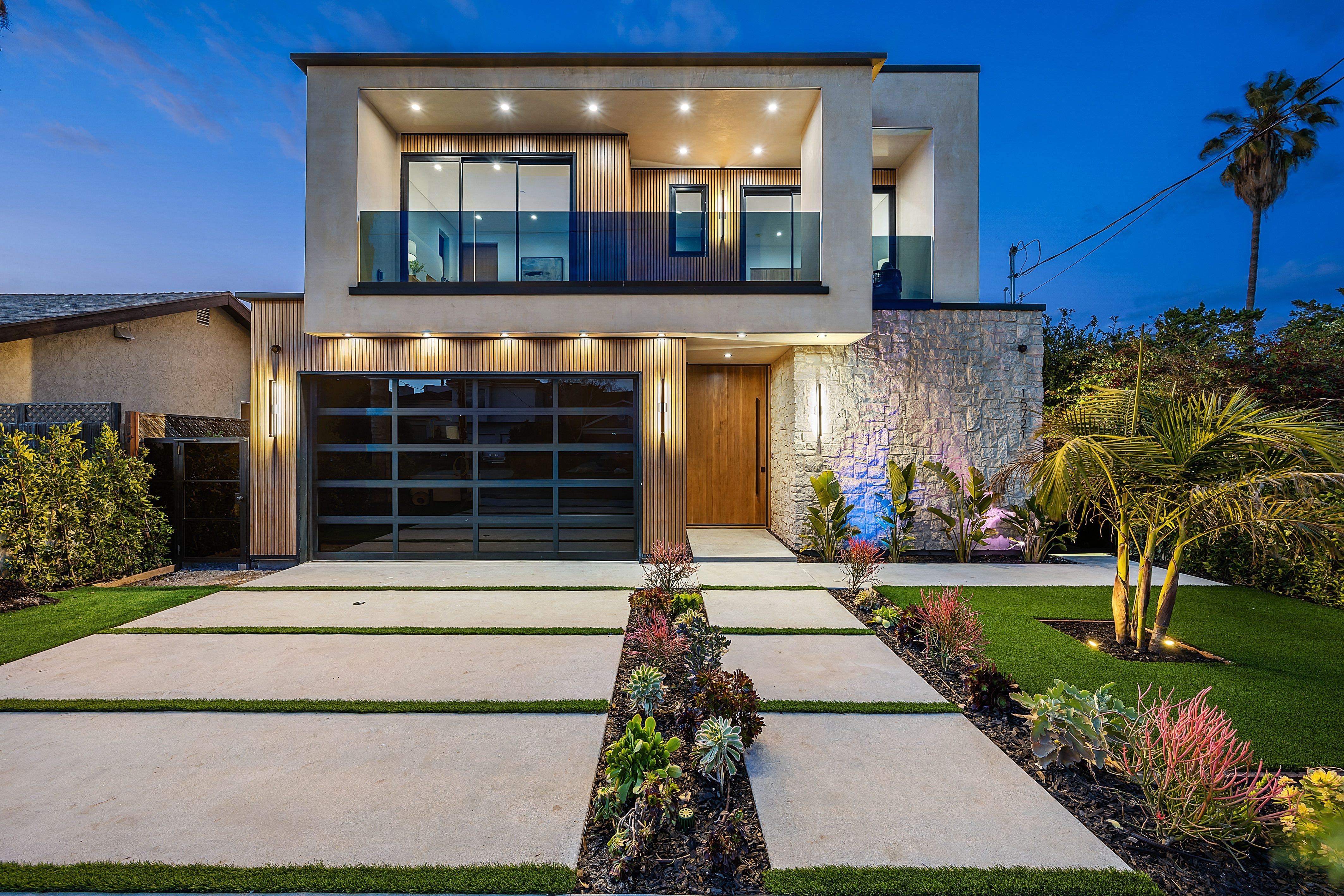
Like traditional modern homes, this style uses natural materials as well. Greenery both in and outside of the home is used to create a bohemian feel. California Modern uses natural materials in a softer way than traditional Modern. Stucco, brick, or wood panels are often used for the home’s exterior. Natural textured stone in a raw state is used on the exterior of the home. There are a lot of light-toned woods, like oak, aspen, or pine used throughout the home. For a casual, modern look, materials like rattan, wicker and fringe are used and wall hangings usually have some texture.
Board Form Concrete:
For the exterior of the home, board form concrete is often used. Concrete is a very modern-looking material. Board form concrete is made to look like the forming frame for concrete that is un-sanded and unpolished. It looks like concrete with a wood grain texture. The finish has become very popular for California Modern homes because it combines the texture and feel of wood with the durability of concrete. The wood-like texture softens the austerity of the concrete but does not take away from its modern look.
Board and Batten Siding:
This type of siding has been around for a long time but has recently gained popularity in some homes. While it is a classic siding choice, it has been made more modern with innovative siding products that are easier to maintain and do not require a large amount of maintenance. Unlike horizontal paneling, board and batten siding lays out the panels vertically. The use of larger, seamless panels gives a modern look.
Rough Sawn Panels:
Another option for siding in a California Modern home is rough sawn panels. These panels mimic rustic wood and add warmth to cooler modern materials like metal, glass, and block panels. They keep their rich color and textures.
Natural Light:
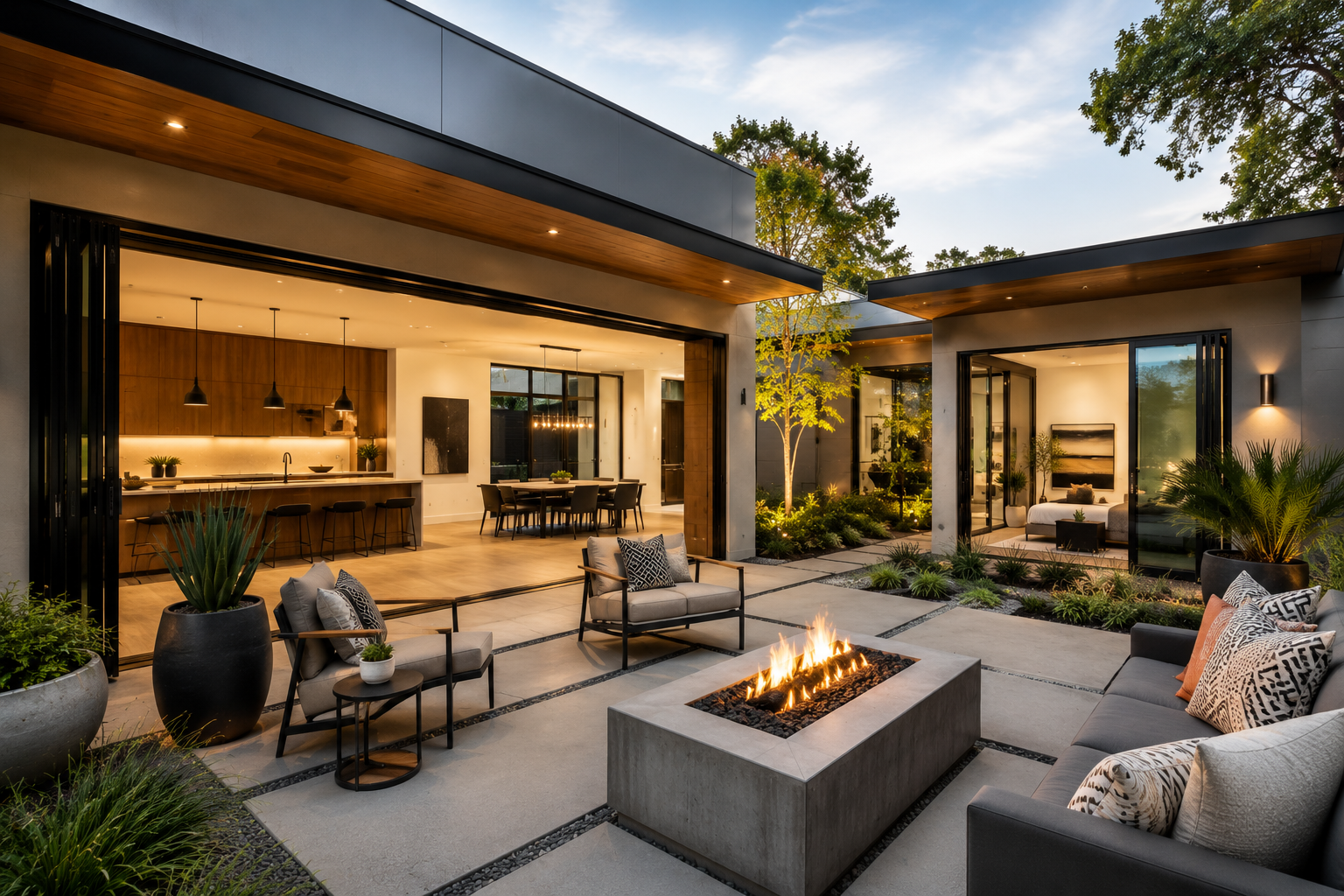
Similar to Modern design, California Modern also relies on natural light so large glass windows and open floor plans are often used in this style. These elements allow natural light to enter easily. There is also an element of indoor/outdoor living so the family room might have a large sliding door that can be opening to the outdoor living space. The fusion between the two spaces allows for more light and a feeling of letting the outside indoors---the key to quintessential California living.
Roof:
The roof lines are softer and not as austere as modern, and often follow more traditional architecture principles in terms of symmetry.
Color Palette:
The color scheme for a California Modern home is one of a neutral backdrop. Colors like white, beige, cream, or tan are often used for the body of the home’s exterior. Interior walls are sometimes left white as well. When adding color to the palette in accents or trim, it is usually only one singular color. When too many colors are combined, the neutral backdrop is no longer neutral, and the impact of the one accent color is lost.
Landscaping:
The landscaping of this type of home involves a flow between the inside and outside of the home. Large bi-fold doors that open to a patio or deck or a covered outdoor living area maximize the use of the space in the home. Being able to bring nature into the house by having an interior courtyard also allows for a connection to nature. Large potted plants, colorful textiles in the outdoor living space, a fire pit, and casual seating that is modern but inviting are all part of the outdoors of this style of home.
Choosing a Design for Your Home’s Exterior
Modern and California Modern homes share similarities like the use of neutral color palettes and clean, straight lines, but they do differ in their overall effect. If you are unsure of which one to choose, Dzinly.com can give you different design options and let you see how they look on your own home so you can choose the best fit.

_1781028384.png)

_1770048688.jpg)
_1770048787.jpg)

_1770048428.jpg)
No comment on this post.